Best Wet Kitten Foods for Sensitive Stomachs and Diarrhea Relief
If your kitten has a sensitive stomach or experiences diarrhea, choosing easily digestible, complementary wet foods can help support digestion and a healthy gut. This guide highlights five wet kitten options formulated for sensitive stomachs, plus a concise buying guide to help you compare ingredients, digestion support, and coat health. Each product below is selected for gentle formulas, digestible ingredients, and reputable brands that cater to kittens with sensitive systems. Use the links to review full product details and confirm suitability for your particular kitten’s needs.
| Product | Brand | Type | Key Benefit |
|---|---|---|---|
| Hill’s Science Diet Sensitive Stomach & Skin Kitten Wet Food | Hill’s Science Diet | Wet | Digestible formula with omega-6 and prebiotic fiber |
| Hill’s Science Diet Sensitive Stomach & Skin Kitten Wet Pouch | Hill’s Science Diet | Wet | Same sensitive-stomach profile in a convenient pouch |
| KOHA Pet Limited Ingredient Bland Diet Kitten Wet Food | KOHA | Wet | Limited ingredients, gentle digestion with chicken and white rice |
| Go! Solutions Sensitivities Limited Ingredient Duck Pâté | Go! Solutions | Wet | Chicken-free duck-based recipe for sensitive stomachs |
| Purina Pro Plan High Protein Wet Kitten Food Variety Pack | Purina Pro Plan | Wet | Kitten-focused formula with DHA for development |
Hill’s Science Diet Sensitive Stomach & Skin Kitten Wet Food (Salmon & Vegetables Stew)

Hill’s Science Diet Sensitive Stomach & Skin Kitten Wet Food is designed for kittens with delicate digestion and skin sensitivity. The formula emphasizes highly digestible ingredients and includes prebiotic fiber to help support a balanced gut microbiome. Omega-6 fatty acids and Vitamin E promote a healthy coat, which can be a concern for kittens with skin sensitivity. Each serving aims to reduce stool irregularities while providing essential nutrients for growth and development in kittens.
Hill’s Science Diet Sensitive Stomach & Skin Kitten Wet Pouch (Salmon & Vegetables Stew)
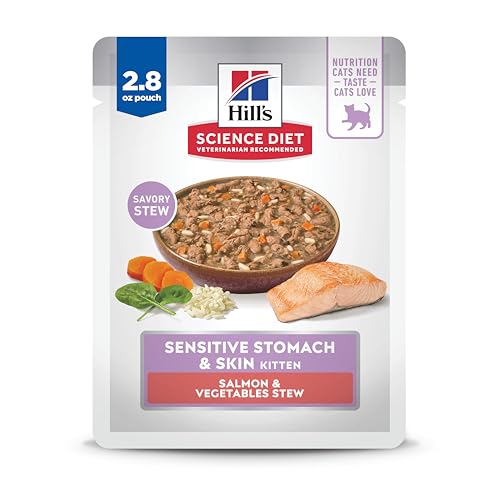
This pouch format mirrors the canned option’s sensitive-stomach formulation in a convenient pouch. It provides easily digestible proteins and vegetables to support digestion while delivering moisture for hydration. The pouch variant can be a practical daily feeding option for kittens with sensitive stomachs, ensuring consistent fiber and nutrient delivery without overburdening the gut.
KOHA Pet Bland Diet Kitten Wet Food (Chicken & White Rice)

KOHA Bland Diet is specifically crafted for sensitive stomach scenarios. Though primarily marketed as a bland diet, the kitten-friendly variation uses a single protein source (chicken) with white rice and pumpkin to support stool regularity. This option is convenient because it requires no cooking and can be used during digestive upset or as a gentle daily diet transition for kittens with digestion issues.
Go! Solutions Duck Pâté (Limited Ingredient)

Go! Solutions Sensitivities Limited Ingredient Duck Pâté is designed for cats with sensitivities and allergies. It uses duck as the primary protein source and avoids common triggers, accompanied by natural fibers like pumpkin to aid digestion. While not kitten-only, it is suitable for growing kittens with sensitive stomachs who may benefit from a simplified ingredient list and a palatable texture.
Purina Pro Plan High Protein Wet Kitten Food Variety Pack

Purina Pro Plan Development Kitten Favorites offer a high-protein, kitten-focused formula designed to support growth. While this pack emphasizes development and nutrition for kittens, its digestibility and variety can be a practical option for kittens with stomach sensitivity when transitioning between flavors. Look for lines that include DHA for brain development and antioxidant support to bolster immunity during early growth.
Buying Guide: Key Considerations For Sensitive Stomachs In Kittens
- Protein source and simplicity: Look for single-protein formulas or limited ingredient diets to minimize digestive triggers. Duck, chicken, or fish-based proteins with minimal additives are common choices.
- Digestive support ingredients: Prebiotics, dietary fiber, and omega-6 fatty acids support gut health and skin/coat condition. Some formulas include pumpkin or beet pulp for stool regularity and digestion.
- Texture and palatability: Kittens can have preferences for pate, chunks, or stews. If a kitten is a picky eater, try a pate or consistent texture before moving to mixed textures.
- Moisture content: Wet kitten foods can help with hydration, especially during digestive upset. Consider combining with a small amount of water or broth if recommended by a vet.
- Life stage and nursing status: Ensure products are appropriate for kittens, not adult cats, unless specifically labeled for kittens or growth stages. Some products are suitable for kittens, adults, and seniors, but confirm age recommendations on the package.
- Veterinary guidance: Chronic diarrhea or persistent stomach issues warrant a veterinary diagnosis. A vet can recommend a tailored diet, such as a bland diet or a specific therapeutic formula.
- Feeding transition: When introducing a new food, mix it with the current food gradually over 7–10 days to minimize GI upset and monitor stool consistency.
- Allergy and intolerance awareness: If a kitten shows signs of intolerance or allergic reaction (vomiting, itching, diarrhea), review ingredient lists for potential triggers and consider a hypoallergenic or limited-ingredient option under veterinary guidance.
Choosing the right wet food for a kitten with a sensitive stomach often requires trying a few options to gauge tolerance. The products listed above emphasize gentle digestion, skin and coat health, and nutrient support essential for growing kittens. Always observe stool consistency, energy levels, and hydration when adjusting diets, and consult a veterinarian for persistent digestive concerns.