Best Treat Dispenser Toys for Dogs: Engage, Train and Entertain
Discover top treat dispenser toys that challenge dogs mentally while rewarding them with tasty treats. This guide highlights five reliable options that suit breeds and skill levels, from puzzle balls to electronic feeders. Each pick promotes slower eating, enrichment, and interactive play for healthy, happy dogs.
| Product | Brand | Key Benefit |
|---|---|---|
| Potaroma Dog Puzzle Feeder Toy | Potaroma | Remote play, brain training, 80-foot range |
| BSISUERM Adjustable Treat Dispenser Ball | BSISUERM | Two dispensing ends, adjustable hole sizes |
| Dog Treat Dispenser Toy – Puzzle | TRECKPET | Limited edition design, open-ended sizes |
| Wobble Wag Giggle Treat Ball | Wobble Wag Giggle | Giggle sounds, no batteries needed |
| Outward Hound Nina Ottosson Treat Tumble | Outward Hound | Beginner level, slow-feeding puzzle ball |
The choices below focus on variety in design and difficulty, ensuring options for puppies through large dogs, and for those who prefer mechanical, electronic, or classic puzzle experiences. Each product section provides a concise overview, relevant features, and practical notes on suitability and use.
Potaroma Puzzle Feeder With Remote
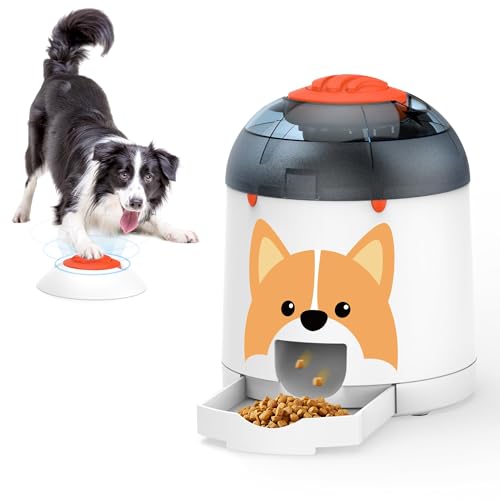
The Potaroma interactive puzzle doubles as a feeder, designed to stimulate canine intelligence while promoting physical activity. It suits all breeds, from puppies to large dogs, and can help reduce boredom by offering a challenging brain game with food rewards. A standout feature is the remote control, enabling training and engagement from up to 80 feet away. The large capacity container minimizes frequent refills during extended play sessions. Pet owners can also personalize the experience by recording voice prompts to guide play and feeding times, enhancing the interactive feel.
BSISUERM Adjustable Treat Dispenser Ball

This treat-dispensing ball features two ends with adjustable dispensing switches. It supports various sizes of dry food and snacks, letting owners tailor the intake per play. The design encourages ongoing chasing and rolling, which helps boost exercise while providing mental stimulation. By controlling the amount of food released, it supports portion awareness and diet management. The adjustable switches make it adaptable for small to large breeds, enabling longer play sessions without overfeeding.
TRECKPET Limited Edition Puzzle Toy

This puzzle toy stands out with a limited edition color and an emphasis on engagement across sizes. It functions as a treat dispenser and cognitive toy, intended to challenge dogs during snack time and training. Designed for daily enrichment, it’s suitable for puppies to larger breeds, promoting curiosity and focus. The product combines brain-teasing action with rewards to maintain interest and support learning new skills, while feeding cues help structure mealtimes or play sessions.
Suitchi Treat Dispenser Toy – Interactive

This press-type dispenser supports self-directed play. Dogs learn to press the toy to release treats, making it a practical training aid for teaching body awareness and patience. It doubles as a slow-feeder, gradually releasing portions to slow eating and improve digestion. The design works well for a range of sizes, providing a straightforward entry point into interactive puzzle toys for beginners or dogs that prefer simple interactive mechanics during enrichment sessions.
Wobble Wag Giggle Treat Ball

The Wobble Wag Giggle Treat Ball is a no-battery option designed to engage dogs through motion and sound. Its internal tube noisemaker creates giggle sounds when rolled or shaken, inviting dogs to investigate and play. As a treat dispenser, it provides ongoing rewards that keep dogs mentally and physically active. The toy is sized to accommodate dogs of many sizes, with multiple pockets making it easy for dogs to grab rewards, promoting extended interactive play while encouraging problem-solving skills.
Outward Hound Treat Tumble Interactive Puzzle Ball

As a Level 1 beginner puzzle, the Treat Tumble provides an approachable introduction to canine problem-solving. The ball holds up to a cup of food and functions as a puzzle feeder during meals or enrichment play. It’s designed for younger dogs or dogs new to puzzle toys, offering mental stimulation without overwhelming complexity. The slow-release mechanism helps manage eating pace and promotes longer engagement with treats and kibble, making it suitable for early training and appetite management.
Starmark Treat Dispensing Bob-a-Lot

The Bob-a-Lot offers adjustable treat dispensing with a large chamber that can hold whole meals. Its weighted bottom helps it wobble, promoting physical interaction and slow feeding. An adjustable gate accommodates larger kibble, allowing customization for different dogs and feeding styles. The design supports extended play sessions and training routines by rewarding persistence and strategy. It’s appropriate for multi-dog households where different chew and feeding patterns exist, encouraging calm, focused activity over time.
Buying Guide: Key Purchase Considerations
- Dog size and breed: Choose a toy with appropriate diameter, hole sizes, and resistance to ensure safe, engaging play without frustration or choking hazards.
- Feeding goals: Determine whether you want slow feeding, cognitive challenge, or remote training features. Electronic options add novelty, while mechanical designs emphasize problem-solving.
- Durability and material: Look for BPA-free, non-toxic materials and durability that matches your dog’s chewing strength and play style.
- Difficulty level: Start with beginner-level puzzles for puppies or dogs new to enrichment, then progress to multi-step or larger challenges as confidence grows.
- Maintenance: Consider ease of cleaning, especially for devices with multiple compartments or electronic components.
- Portability and usage setting: Decide whether you’ll use the toy indoors, outdoors, or during travel, and check whether the toy is easily portable or weather-resistant.
- Noise and rewards: Some toys use sounds or require batteries, while others are quiet. Choose based on your environment and dog’s sensitivity to stimuli.
- Playtime goals: Align toy choice with training objectives such as paw coordination, impulse control, or slow eating to support overall health and enrichment.
These options provide a spectrum of approaches to treat-dispensing toys, from self-contained puzzles to remote-training systems. When selecting, assess your dog’s temperament, energy level, and experience with puzzles to identify the best fit for ongoing enrichment and healthy dining habits.