Best Stray Cat Repellent Solutions for a Cat-Free Yard and Garden
Protect lawns, furniture, and flowerbeds from cat damage with effective, humane deterrents. This article highlights five top-rated cat deterrent products, detailing how they work, how to use them, and what to consider when choosing the right option for outdoor and indoor spaces. Each choice relies on natural scents or plant-based ingredients to discourage cats while remaining safe for people, pets, and plants.
| Product | Type | Key Benefit | Form |
|---|---|---|---|
| Mimo Style Cat Deterrent Outdoor | Ball Deterrent | Long-lasting peppermint scent, year-round protection | Natural oil balls |
| BULUOHUA Cat Repellent Outdoor | Ball Deterrent | Plant-based ingredients, all-season use | Natural oil balls |
| Nature’s Mace Cat Mace Granular | Granular | Strong barrier to stop digging and marking | Granules |
| VITAFOR Cat Deterrent Outdoor | Ball Deterrent | Humane scent deterrent, long-lasting | Natural oil balls |
| Nature’s Mace Cat Mace Spray | Spray | Targeted area spray for quick training | Ready-to-use spray |
Mimo Style Cat Deterrent Outdoor

The Mimo Style deterrent uses a natural peppermint oil blend to create a scent barrier that is offensive to cats. Designed for outdoor and indoor use, these deterrent balls are positioned around lawns, mulch, and garden areas to keep cats off furniture, plants, and flower beds. The formula emphasizes safety for kids and other pets, while offering a long-lasting effect that remains active through irrigation and seasonal weather. The product targets stray, neighborhood, and house cats by emitting odors that encourage them to avoid restricted zones, thereby reducing digging, scratching, and marking in treated areas.
BULUOHUA Cat Repellent Outdoor
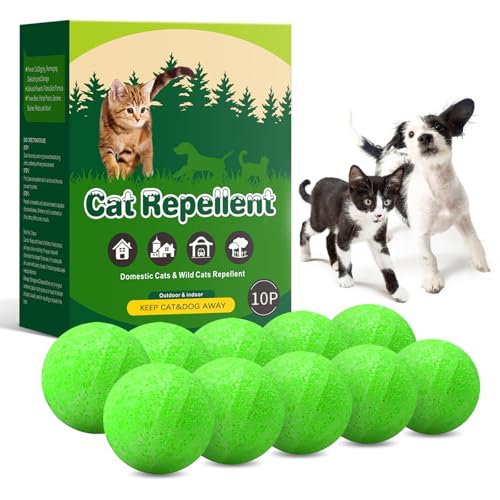
This plant-based cat deterrent focuses on a natural scent profile derived from peppermint, camphor, lemon, garlic, lemongrass, and bitter citrus oils. It is formulated to deter stray and neighbor cats from yards, gardens, and outdoor furniture without harsh chemicals. For best results, apply daily for the first week or two, reapplying as needed to establish a consistent boundary. Cats may initially investigate but should learn to avoid treated zones as scent cues strengthen over repeated use.
Nature’s Mace Cat Mace Granular
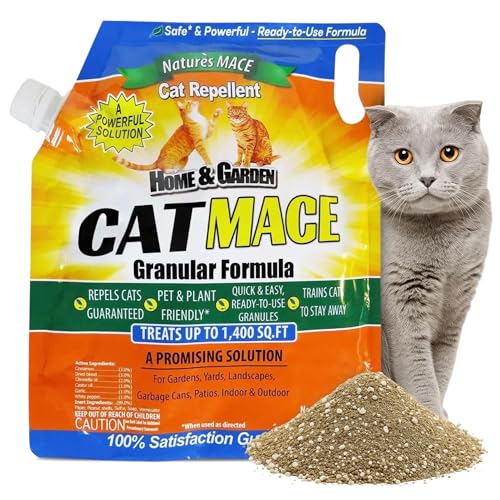
Nature’s MACE Granular Cat Repellent provides a durable, all-season barrier designed to protect gardens, flower beds, lawns, patios, and other outdoor spaces. The formula relies on plant-based ingredients to deter cats from digging, urinating, defecating, or chewing plants. It is safe around families, pets, and lawns when used as directed and aims to establish a long-term boundary that discourages recurring cat activity in treated zones.
VITAFOR Cat Deterrent Outdoor

VITAFOR offers a natural peppermint-based deterrent ball designed to keep cats away from yards, gardens, and furniture. The product emphasizes humane usage, with essential oils derived from camphor and citrus components that cats tend to dislike. Each ball is individually sealed for long-term storage and provides a protective period that can extend up to several weeks, depending on weather conditions. Regular replacement helps maintain consistent deterrence against stray and neighborhood cats.
Nature’s Mace Cat Mace Spray

This spray deterrent from Nature’s MACE is ready-to-use and designed for targeted applications. It covers up to about 1,000 square feet and is ideal for training cats to stay away from specific areas such as beds, decks, or trash zones. The formula relies on essential oils with strong scent aversion properties, including peppermint and castor oil, to discourage urine marking, scratching, and other unwanted behaviors. Daily application during initial training days helps establish the routine.
Buying Guide: Key Purchase Considerations
- Effectiveness and duration: Consider whether you prefer long-lasting ball deterrents or a spray for spot treatments. Ball products typically offer continuous scent release, while sprays target specific problem areas.
- Ingredients and safety: Look for plant-based, scent-driven formulas that are labeled safe for pets, humans, and plants. Avoid products with harsh chemicals or irritants if you have children or sensitive pets.
- Outdoor suitability: If you live in regions with rain or snow, choose weather-resistant options (waterproof, sun-protected) to ensure year-round performance.
- Number and placement: For large yards, you may need multiple deterrent balls or frequent spray applications. Map problem zones like flowerbeds, mulch, and furniture to optimize placement.
- Maintenance and reapplication: Some products require daily use during an initial period, while others suggest weekly or biweekly reapplication. Consider your maintenance capacity and schedule.
- Humane approach: Favor deterrents that discourage cats without harming them. Scent-based methods are generally considered humane when used as directed.
- All-season considerations: All-weather formulas are preferable for outdoor use across seasons. Countermeasures like mulch barriers or boundary markers can complement deterrents.
- Compatibility with pets: If you have dogs or other pets, verify that the chosen product is safe around them and won’t attract or encourage other animals.
When selecting a stray cat deterrent, balance immediate effectiveness with long-term boundary-building. A combination approach—using balls at perimeter zones and a targeted spray for hotspots—often yields the best results. Consistency in application during the initial weeks is a key predictor of lasting success, followed by periodic rechecks to adjust placement as your yard evolves with plants and seasonal growth.