Best Slow Release Fish Food for Stress-Free Aquarium Care
Finding the right slow-release fish food can help keep tropical fish healthy while reducing maintenance time. This guide covers top options that release nutrients gradually, support color and immune health, and minimize waste. Explore five reliable choices from trusted brands to match different tank sizes and feeding needs.
Product Overview
| Product | Brand | Highlights |
|---|---|---|
| Aqueon 7 Day Vacation Feeder Slow-Release Fish Food for Tropical Fish – 1 Pack | Aqueon | Nutritious ingredients, enhances colors, reduces waste |
| Tetra Weekend and Vacation Feeder Slow-Release Fish Food for Tropical Fish 1.06 Ounce (Pack of 1) | Tetra | Up to 14 days feeding, won’t dissolve on its own, supports immune health |
| Tetra Weekend and Vacation Feeder Slow-Release Fish Food for Tropical Fish | Tetra | Edible gel block, up to 5 days, non-dissolving |
| Zoo Med Laboratories Giant Banquet Block Feeder (3 Pack) | Zoo Med | Lasts 10–14 days per block, water-safe |
| Zoo Med AZMBB2 Mini Banquet Block Feeders, 12 Count | Zoo Med | Two 6-unit cards, 3–4 days per block, protein-rich micro pellets |
Aqueon 7 Day Vacation Feeder Slow-Release Fish Food
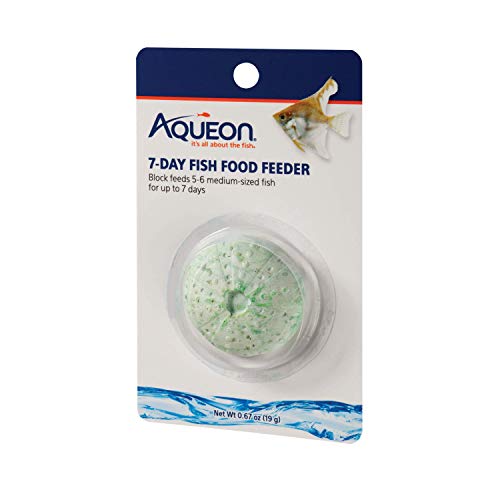
The Aqueon slow-release feeder is designed to deliver steady nutrition over a week. Its formulation aims to attract tropical fish and bring out natural colors while reducing waste through controlled release. This option suits medium-sized tanks and aquariums with reliable water circulation. It provides a simple, weekend-friendly feeding routine without daily dosing, helping maintain stable water quality between visits.
Tetra Weekend and Vacation Feeder 1.06 Ounce

This Tetra product uses a slow-release gel block designed to nourish tropical fish for up to two weeks. It won’t dissolve on its own and only releases food when fish nibble, which helps maintain water clarity. The ProCare formula is intended to support immune health and long-term vitality, making it a practical choice for owners who travel occasionally or have strict maintenance schedules.
Tetra Weekend and Vacation Feeder Slow-Release Block

This cut-in-block design lets aquarium fish graze as needed. Made with whole daphnia and essential nutrients, it aims to keep fish healthy for up to five days. The gel does not dissolve like plaster feeders, which helps preserve water quality and reduces the risk of sediment buildup in the tank.
Zoo Med Giant Banquet Block Feeder (3 Pack)
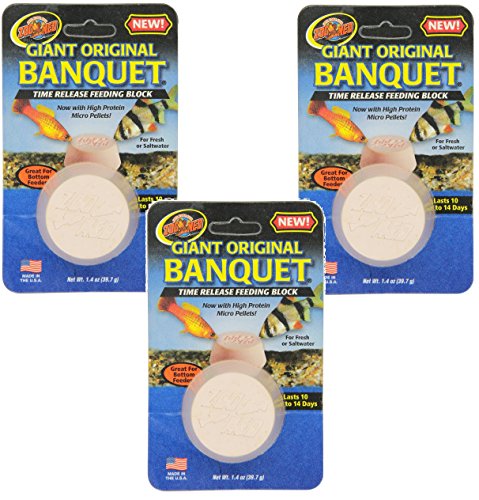
These time-release feeding blocks last 10 to 14 days each and are formulated to avoid clouding aquarium water. They’re especially useful for small fry and active fish that benefit from constant access to nutrition. The multi-pack design supports longer trips and multiple tanks of similar size.
Zoo Med AZMBB2 Mini Banquet Block Feeders

This 12-count pack includes mini blocks designed for smaller tanks or nano aquariums. Each block feeds several small to medium fish for about three to four days, thanks to high-protein micro pellets. It’s particularly suitable for bottom feeders or mixed communities where constant grazing is beneficial but space is limited.
Pro Balance 14-Day Vacation Feeding Blocks
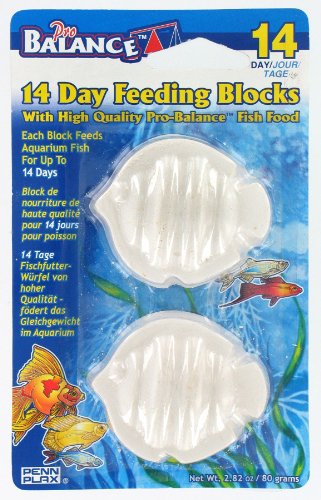
Penn-Plax Pro Balance blocks provide two weeks of feeding in a fish-shaped format. They’re designed for 1–3 fish and emphasize a stable release over days. These blocks are a practical option for travelers who want a straightforward, non-daily feeding routine. The shape and composition aim to balance nutrition without overfeeding in typical community tanks.
Buying Guide: How To Choose Slow-Release Food For Your Tank
Key factors influence effectiveness and water quality when using slow-release fish foods. Consider tank size, fish species, feeding frequency, and water temperature.
- Tank size and stocking level: Larger tanks or heavily stocked aquariums may need blocks with longer release times or higher nutrient density. For small tanks, compact mini blocks can prevent overfeeding.
- Species and dietary needs: Omnivores and herbivores may benefit from blocks that include plant matter, micro pellets, and occasional protein. For picky eaters, look for blocks formulated with whole foods and recognizable ingredients.
- Release mechanism: Some blocks dissolve gradually, while others are designed to be nibble-friendly. Gel-based blocks tend to reduce waste and water pollution, but ensure your tank has adequate aeration?
- Water quality and filtration: Always monitor ammonia, nitrite, and nitrate after long absences. Slow-release blocks should be used alongside proper filtration to prevent residue buildup.
- Temperature and water movement: Higher temperatures accelerate digestion; blocks releasing too quickly can overwhelm your system. Match product duration with your climate and tank circulation.
Practical Considerations and Comparisons
When choosing among options, compare release duration, ease of use, and how well the food aligns with your maintenance routine. Gel blocks may offer the most consistent release and water stability, while multi-pack options reduce the need for frequent reordering. Always verify compatibility with your tank inhabitants and ensure proper aeration to support the block’s dissolution process. For trips beyond a week, combining two products or opting for longer-duration blocks can help maintain steady feeding without daily intervention.
Implementation Tips
Test a new slow-release product before leaving on extended travel. Introduce the block several days prior to a trip to confirm it releases at the expected rate and does not cloud the water. In tanks with very active or large fish, observe behavior and adjust feeding blocks accordingly to prevent overfeeding or competition near the block.