Best Sealer for Fish Tank: Top Safe Silicone Sealants for Aquariums
Choosing the right aquarium sealant is essential for long-lasting, leak-free tanks. The following selections focus on fish-safe, flexible silicone sealants that cure quickly and adhere well to glass and other non-porous surfaces. Each product listed is designed for both freshwater and saltwater environments, offering durability without compromising aquatic life.
Summary Table
- LISRUX 1 Pack Aquarium Silicone Clear Sealant — High elasticity, fast curing, fish-safe
- SELSIL Aquarium Silicone Clear Sealant — High elasticity, ozone- and UV-resistant, fish-safe
- DaToo Aquarium Silicone Sealant Clear Type — 100% silicone, strong adhesion, water-resistant
- Seal/Fix Aquarium Silicone Sealant (2 Pack) — Non-toxic, fast curing, durable seal
- Aquarium Safe Silicone by LANGXINST — Underwater curing, strong adhesion, safe for aquatic life
1 Pack Aquarium Silicone Clear Sealant — LISRUX

Product features indicate a non-toxic, solvent-free acid-cured silicone sealant with 100% silicone content, designed to be aquarium-friendly and safe for fish. It cures quickly, with surface drying in about 30 minutes and full cure recommended within 48 hours. Temperature compatibility ranges from about -50 °C to 100 °C, enabling resilience in varied environments. The sealant relies on atmospheric moisture to solidify, delivering high strength and toughness while maintaining flexibility for underwater applications. This makes it suitable for sealing seams, patches, and general repairs in both freshwater and saltwater tanks.
The product emphasizes fish safety as a primary selling point, aiming to minimize any leaching or harmful exposure. Its fast curing profile helps reduce downtime after repairs, and its strong adhesion supports long-term stability on typical aquarium substrates. Potential users should follow the recommended surface prep and cure times, especially in cooler or very humid conditions where curing can slow down. Overall, this option targets hobbyists seeking a reliable, fish-safe sealant with robust underwater performance.
2. SELSIL Aquarium Silicone Clear Sealant — High Elasticity

SELSIL’s clear sealant is marketed as fish-safe and solvent-free, with 100% silicone polymer composition. It adheres well to glass and many non-porous surfaces without the need for primers, and it is suitable for both freshwater and saltwater tanks. The product is noted for strong elasticity and flexibility, with resistance to ozone, UV radiation, and temperature fluctuations, reducing the risk of cracking or discoloration over time. Its conforming to ISO standards adds a level of assurance for hobbyists and professionals concerned with aquarium-grade materials.
In terms of application, this sealant aims to deliver a clean, transparent finish with durable bonding for glass seams and accessories. While it offers broad surface compatibility, users should still ensure clean, dry surfaces before application and follow cure times for optimal elasticity. As with any sealant, adequate ventilation during application is advisable, and users should account for full cure duration before exposing the tank to full loads or re-filling after repairs.
3. DaToo Aquarium Silicone Sealant Clear Type — 10.14 Fl Oz
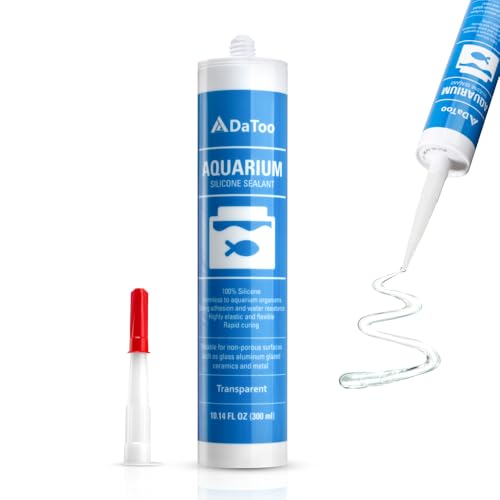
DaToo presents a 100% pure silicone formula designed to safeguard ecological safety while providing strong adhesion and water resistance. The product is VOC compliant and adheres to ISO 11600 and ASTM C920 standards, offering ready-to-use, no-mix application. It is suitable for bonding glass surfaces without primer and tolerates immersion, making it appropriate for both freshwater and seawater environments. The sealant promises high elasticity and flexibility, resisting high and low temperatures without cracking or discoloration, and provides superior insulation for aquarium components.
For aquarists, DaToo emphasizes ease of use and reliable performance in multiple scenarios, including construction and routine maintenance. The clear formulation is particularly appealing for visible seams and delicate aquascapes. Users should apply in a clean, dry environment and allow full cure times per guidelines before re-filling the tank or subjecting the bond to stress. This option suits those seeking a robust, beginner-friendly sealant with marine-safe properties.
4. Seal/Fix Aquarium Silicone Sealant Clear — 2 Pack

This Seal/Fix option is offered as a two-pack, emphasizing a safe, non-toxic formula suitable for both freshwater and saltwater tanks. The product highlights a strong, elastic seal designed to resist leaks, with fast skin formation and a full cure typically within 24 hours. It’s described as easy to apply, delivering a smooth finish with minimal downtime before re-filling the tank. The zero-solvents claim aligns with fish safety, reducing concerns about exposure during and after application.
From a practical perspective, Seal/Fix positions itself as a reliable go-to for sealing glass seams, patching leaks, or attaching accessories. Its two-pack packaging can be advantageous for ongoing projects or larger aquariums. As with other silicones, careful surface preparation (clean, dry glass) and gradual curing are recommended to ensure an optimal bond and long-term durability.
5. LANGXINST Aquarium Safe Silicone — Underwater Cure

Aquarium Safe Silicone from LANGXINST markets itself as underwater-curing and highly adhesive for glass and aquarium components. The sealant is designed to remain safe for aquatic life while enabling direct underwater application, which can simplify repairs without draining the tank. It aims to provide strong bonding for small to large aquariums and is described as compatible with both underwater plants and fish, making it a practical choice for ongoing maintenance and construction tasks.
Potential users should verify surface readiness and environmental conditions during application, ensuring adequate curing time before exposing the repaired area to full tank stress. The underwater-curing capability is attractive for complex setups or those prioritizing minimal disruption to aquatic life during repairs. As with all silicone sealants, following package instructions for cure times and storage is essential to maintain elasticity and bond strength.
Buying Guide: Key Purchase Considerations
When selecting a sealer for a fish tank, consider the following factors to ensure a safe, effective, and durable bond:
- Fish safety and chemistry: Choose 100% silicone or explicitly labeled fish-safe formulations free of solvents, VOCs, and harmful additives. This minimizes risks to aquatic life during and after curing.
- Cure time and application: Fast or user-friendly cures reduce tank downtime. Be sure to plan around cure times, temperature, humidity, and bead size, which can influence overall durability.
- Adhesion and elasticity: A strong bond to glass and non-porous surfaces, coupled with high elasticity, helps accommodate thermal expansion, water movement, and substrate shifts without cracking.
- Environmental compatibility: For saltwater tanks, ensure the product tolerates exposure to marine ions and occasional immersion without losing integrity or elasticity.
- Underwater curing: Some products advertise underwater curing, which can simplify in-tank repairs. Verify actual performance claims and suitability for your tank size and setup.
- Standards and compatibility: Look for ISO, ASTM, or other standards compliance as an indicator of reliability and aquarium-grade formulation.
- Surface preparation: Most sealants require clean, dry surfaces. Follow manufacturer guidelines for best results and to avoid premature failures.
- Thickness and bead size: Larger beads cure more slowly and may require longer curing environments, especially in cooler conditions.
- Warranty and compatibility: Check product documentation for warranty coverage and compatibility with plastics, acrylic, aluminum, or ceramic tank components.
In summary, the best choice depends on your specific tank type (freshwater vs. saltwater), project scope (daily repairs vs. large sealing), and whether you prioritize quick cure times or underwater curing capabilities. All selections listed here are designed to prioritize fish safety while delivering reliable performance for aquarium maintenance and construction.