Best Rear Boots for Horses: Durable Protection for Leg Health
Choosing rear leg boots for horses helps protect tendons and ligaments during training, jumping, and competitive work. This guide reviews five top options, highlighting fit, ventilation, and durability to help riders select boots that balance protection with comfort. The selections feature vented designs, quick-grip closures, and materials designed to dissipate heat while guarding against impact. Below is a quick summary of the chosen products to compare at a glance.
| Product | Brand |
|---|---|
| Tough 1 Economy Vented Rear Sport Boots, Black, Medium | Tough 1 |
| Classic Equine ClassicFit Rear Splint Boots Hotpink MEDIUM | Classic Equine |
| BARN & STABLE Super Vented Horse Sport Boots | BARN & STABLE |
| Tough 1 Vented Sport Boots Rear M Blue | Tough 1 |
| Harrison Howard Horse Sport Medicine Front Shock-Absorbing Boots | Harrison Howard |
Tough 1 Economy Vented Rear Sport Boots

The Tough 1 Economy Vented Rear Sport Boots feature a form-fitting design intended to stay in place during movement. The boots include three quick grip tabs to secure them and a perforated neoprene interior that encourages hot air to escape while allowing the leg to breathe. This combination supports comfort for extended wear and reduces heat buildup on active legs.
Classic Equine ClassicFit Rear Splint Boots

Classic Equine’s ClassicFit Rear Splint Boots are designed with a focus on correct limb alignment through a uniquely angled suspensory sling, helping to ensure proper support of the lower limb. The SMB-style boot construction aims to complement classic horses’ leg shape while providing reliable protection against impact during training and competition.
BARN & STABLE Super Vented Horse Sport Boots
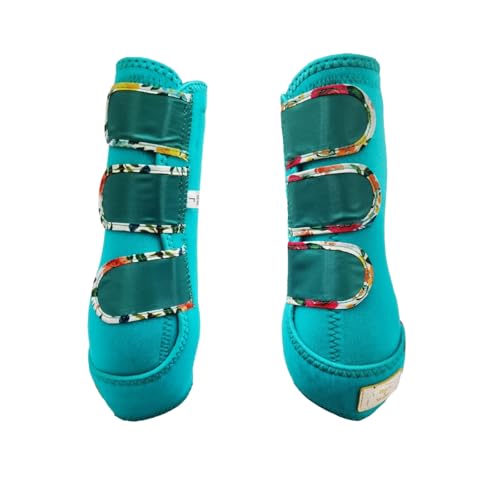
These vented sport boots emphasize comfort and protection through breathable materials, lightweight straps, and a soft neoprene outer shell with foam padding for shock absorption. They feature three sturdy quick-grip buckles to keep the legs stable and secure during fast movements, while being easy to put on and take off for routine care and cleaning.
Tough 1 Vented Sport Boots Rear M Blue

The Tough 1 Vented Sport Boots for the rear leg emphasize extreme venting and a color option in blue. The design focuses on airflow to reduce heat buildup during training sessions and competitive work, with a simple, ergonomic fit intended to stay in place on the horse’s hind limbs.
Harrison Howard Horse Sport Medicine Front Shock-Absorbing Boots

Harrison Howard’s Sport Medicine boots emphasize all-around protection with a heavy-duty shield designed to handle high-impact work. Features include heat and moisture management through breathable materials, along with a cradle fetlock design that aims to protect tendons and ligaments as the horse moves in varied ground conditions. They are suited for endurance training and demanding performance scenarios.
Buying Guide: Key Purchase Considerations
Ventilation and materials play a pivotal role in boot performance. Look for neoprene or mesh panels that promote airflow to minimize heat buildup and reduce the risk of sweat-related irritation. A well-ventilated boot should pair with a sturdy, yet flexible outer shell to absorb shocks without restricting movement.
Fit and securing mechanism are essential for safety and effectiveness. Quick-grip buckles or multiple straps should offer secure closure while remaining easy to adjust during maintenance. A form-fitting design helps prevent boot slippage, which can cause chafing or reduced protection during work.
Protection level varies with activity. For endurance or speed work, consider boots with robust padding and reinforced areas around the fetlock and cannon bone. If the goal is gentle turnout or light training, lighter vented boots might suffice to minimize heat while offering basic support.
Maintenance considerations include ease of cleaning and water resistance. Boots with water- and mud-proof shells simplify post-ride care, especially in wet or muddy environments. Durable materials extend the lifespan of boots used in regular workouts or competitive settings.
Style and color options can be a factor for some riders, particularly in schools or showing circuits. While color is not a safety feature, selecting a boot with consistent sizing and replacement parts helps maintain uniform appearance and performance over time.
Additional Perspectives: What to Compare
Durability vs. weight: Heavier boots may offer more protection but can slow movement and add fatigue. Lighter, ventilated designs favor performance and rider comfort in warm climates. Consider your typical riding conditions—indoor arenas vs. outdoor trails—and select boots with appropriate material resilience.
Open-heel vs. closed design: Some riders prefer more coverage to guard against brush and impact, while others favor flexibility and greater ankle movement. Evaluate the level of protection needed for your horse’s activity level.
Size availability: Ensure the product line offers suitable sizes for your horse’s hind limb dimensions. A boot too tight can impede circulation, while a boot too loose can slip or fail to provide effective protection.