Best Outdoor Feral Cat Feeding Stations for Safe Mealtimes
Providing a dedicated, weatherproof feeding space helps feral, stray, and community cats stay nourished while minimizing mess and attracting unwanted wildlife. The following five outdoor feeding stations are designed to withstand the elements, deter intruders, and offer a comfortable dining area for cats. Each option features weather resistance, elevated or protected feeding areas, and practical designs suited for porches, backyards, patios, and balconies. Read on to compare features, materials, and intended use to pick the best fit for your local cat colony and available space.
| Product | Brand | Key Benefit |
|---|---|---|
| Outdoor Cat Feeding Station, Weatherproof Elevated Feral Cat House | GDLF | Elevated, animal-proof feeding platform |
| Waterproof Cat House for Outdoor Cat Feeding Station | Deblue | Weatherproof shelter with durable frame |
| Veehoo Outdoor Cat Feeding Station, 2 Entrances | Veehoo | All-weather shelter with elevated feeding |
| PELUOMOZ Outdoor Cat Feeding Station | PELUOMOZ | Dual feed holes, insulated roof and walls |
| WAYTRIM Waterproof Cat House for Outdoor Feeding Station | WAYTRIM | Windproof, rainproof shelter for feral dining |
GDLF Outdoor Cat Feeding Station

The GDLF weatherproof feeding station is built to support feral cats year-round. Its elevated feeding platform reduces the chance of food access by raccoons or other non-target animals, helping maintain a clean, safe dining area. The structure uses sturdy, water-resistant materials designed to endure rain, wind, and temperature swings. The design emphasizes a dedicated space where cats can approach without exposure to the elements, keeping food fresher and more appealing. Housing is compact enough for smaller outdoor spaces while still providing enough room for bowls and water. The combination of weatherproofing and an animal-proof feeding platform makes this option attractive for colonies that require reliable, long-term protection from wildlife and weather.
Deblue Waterproof Cat House For Outdoor Feeding Station
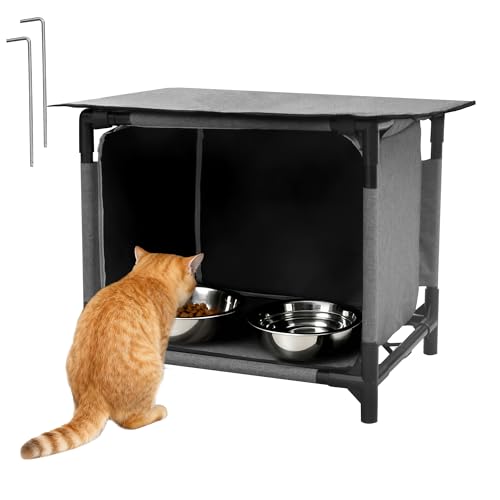
Deblue combines weather resistance with a compact footprint suitable for tight spaces. The raised floor helps keep the feeding area drier and cleaner, and the durable construction includes two ground stakes to improve stability in windy conditions. The design supports a sheltered feeding experience for stray and feral cats without requiring bowls included with the shelter, offering flexibility for standard or custom feeding setups. Its weather-resistant materials are intended to withstand outdoor use across seasons, making it a practical choice for community cat programs that prioritize dependable sheltering alongside feeding access.
Veehoo Outdoor Cat Feeding Station
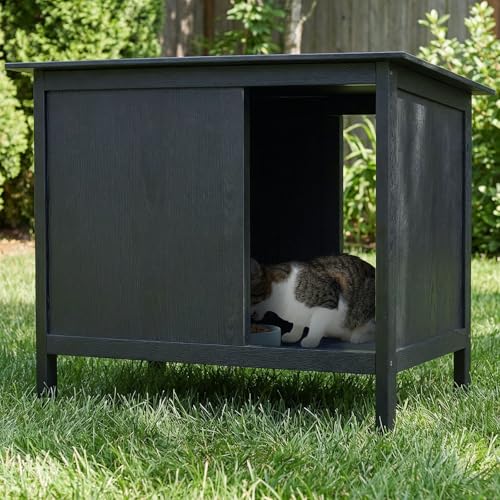
The Veehoo unit emphasizes all-weather protection through a weatherproof exterior and an elevated interior. Constructed from durable, recycled composite wood, it resists rotting, warping, and cracking—providing a long-lasting shelter that remains stable in high winds. Its raised feeding design helps keep kibble dry and accessible, while two entrances support multiple cats at once and add flexibility for entry and exit routes. This shelter is designed for exterior placement where rain and moisture are common, and its durable materials reduce the need for frequent replacements, making it a sustainable option for ongoing cat feeding programs.
PELUOMOZ Outdoor Cat Feeding Station

PELUOMOZ features an insulated roof and fully enclosed sides with a dual-feed-hole design, aiming to minimize spillage and keep meals contained even in windy conditions. The 16″×12″×15.5″ footprint fits neatly on porches, decks, or balconies, while the roomy interior accommodates bowls of various sizes. The dual-feed holes provide a fixed flow path, reducing movement and making mealtime tidier for caretakers and neighbors. This model is well suited for communities with multiple cats sharing a single dining station, offering predictable access and a contained feeding environment that helps prevent weather-related messes.
WAYTRIM Waterproof Cat House For Outdoor Feeding Station

WAYTRIM focuses on practical shelter reliability with a windproof and rainproof design. The forest-safe fir construction is non-toxic and odorless, promoting a safe dining environment for feral cats. The shelter is described as suitable for multi-cat feeding, with enough space to accommodate several felines at once. A key feature of this model is the option to install a monitor or heater within the roof area, offering a way to observe health and well-being during meals in dependent climates. The combination of a durable exterior and thoughtful interior layout supports a tidy and controlled feeding routine for outdoor cat colonies.
Buying Guide: Key Purchase Considerations
- Climate and weather resistance: Choose materials that repel water, resist corrosion, and withstand wind and temperature swings for your region.
- Feeding capacity and space: Assess how many cats you intend to feed at once and measure your available outdoor footprint to select an appropriately sized station.
- Animal deterrence: Look for elevated platforms, enclosed sides, and sturdy construction to limit access by non-target wildlife and neighborhood pests.
- Ease of cleaning and maintenance: Favor designs with simple bowl access, removable components, and accessible interiors to simplify routine cleaning.
- Multi-cat compatibility: If you manage a colony, consider dual-entry or larger interior space to accommodate simultaneous mealtimes without overcrowding.
- Compatibility with heating or insulation: In colder climates, evaluate options that allow for heating pads or insulated walls to maintain comfort during meals.
- Portability and placement: For constrained spaces, opt for compact units; for larger yards, consider units with stakes or anchors to secure them against wind.
- Durability and materials: Prioritize weatherproof woods, heavy-duty plastics, or composite materials that resist rot, cracking, and wear over time.
- Durability vs. ease of use: Heavier, more durable shelters may require more effort to relocate, whereas lighter models are simpler to reposition.
- Appearance and neighbor considerations: Choose designs that blend with outdoor aesthetics while minimizing potential noise or visual disruption for neighbors.
- Maintenance plan: Develop a routine for cleaning bowls, removing debris, and checking for wear to maximize lifespan of the station.
- Budget and replacement parts: Consider total cost of ownership, including potential replacement parts like stakes, panels, or doors.