Best Nesting Boxes for an Easy-to-C Clean Chicken Coop Interior
Nesting boxes are a core part of any productive chicken coop. The right design helps hens lay clean, intact eggs while keeping the nesting area easy to maintain for you. This article highlights top nesting box options that emphasize easy cleaning, practical layouts, and reliable egg collection. Each product is assessed for size, material, and how well it fits a coop’s interior. Use the quick-reference table below to compare key features at a glance.
| Product | Compartments | Key Benefit | Material |
|---|---|---|---|
| AugFir Nesting Boxes (2 Compartment) | 2 | Roll-away design improves egg collection | Plastic/Composite |
| EliteEdge 10 Compartments | 10 | Easy cleaning; centralized egg tray | Metal |
| Matutinus 3 Cozy Roll-Away | 3 | Private space with rolling tray | Plastic |
| PeakPursuit 4-Hole Roll Away | 4 | Flexible mounting; easy front collection | Metal/Plastic |
| VEVOR 3 Compartments Roll Away | 3 | Sturdy build; simplified egg retrieval | Galvanized steel/Plastic |
AugFir Two-Compartment Nesting Boxes
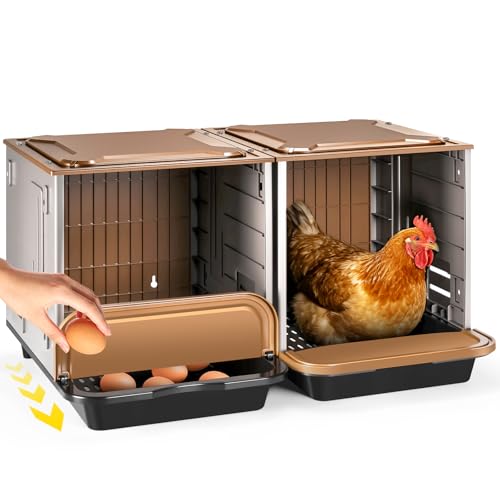
This package includes two nesting boxes designed to provide a safe, private space for hens to lay eggs. The dual-compartment layout keeps nesting calm and separates hens’ activity zones from the front collection area. The roll-away feature ensures eggs roll into a front collection area, reducing the chance of being crushed or pecked and simplifying daily chores. The build emphasizes a straightforward cleaning process and easy access for routine maintenance. Hens benefit from a sheltered space, while egg collection remains clean and efficient.
Key considerations:
- Two-compartment design minimizes crowding and reduces egg mishaps.
- Roll-away mechanism enhances egg protection and simplifies retrieval.
- Front-access lid helps keep nesting areas sanitary with minimal effort.
EliteEdge 10-Compartment Nesting Boxes

EliteEdge offers a larger, multi-compartment option designed for higher flock densities. Its easy-to-clean construction features a slight incline that guides eggs into a centralized tray, eliminating the need to reach into each compartment. The modular layout supports straightforward assembly and maintenance, while the design keeps hens comfortable with ample space per laying area. This option suits medium-to-large coops seeking efficient egg collection without compromising hen welfare.
Important aspects:
- 10 compartments reduce competition and stress among layers.
- Inclined design safely routes eggs to a tray for quick collection.
- Simple assembly and hose-clean friendly surfaces.
Matutinus Roll-Away Nesting Boxes (3)
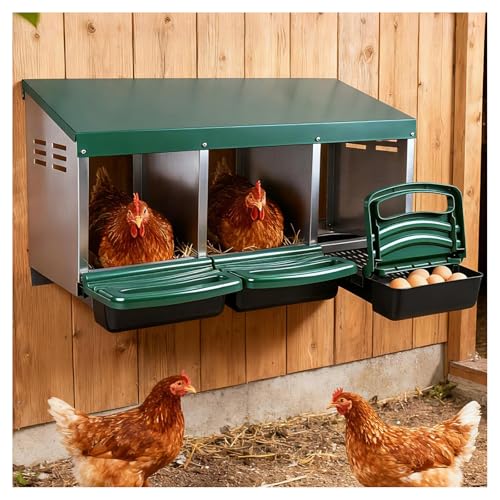
Matutinus nests emphasize a spacious interior with a private, comfortable space for each hen. The three-box design includes keyhole slots for wall or surface mounting, offering installation flexibility inside or outside the coop. Its rolling tray system centralizes egg collection and helps protect eggs from pecking. The trays detach for easy cleaning, supporting quick maintenance routines to keep nesting spaces sanitary and inviting for layers.
Highlights:
- Keyhole slots enable flexible mounting options.
- Roll-away tray reduces egg handling and enhances protection.
- Removable trays simplify cleaning and sanitation.
VEVOR 3-Compartment Roll Away Nesting Boxes

VEVOR’s three-compartment system combines sturdy galvanized steel with high-strength plastic for a durable, corrosion-resistant nesting solution. The wide front beam provides stability, while the angled compartments help guide eggs into a front collection area. The design reduces wobble and supports efficient cleaning. A roll-away mechanism keeps eggs protected during laying and makes retrieval quick and clean, even in busier coops.
Key points:
- Three compartments accommodate multiple hens with less competition.
- Galvanized steel plus plastic construction for longevity and easy cleaning.
- Angled trays and a simple front-access design streamline egg collection.
Buying Guide: Key Considerations For Choosing Nesting Boxes
When selecting nesting boxes for an easy-to-clean chicken coop interior, several factors influence both egg quality and maintenance effort. This guide compares common design choices and their implications for different coop setups and flock sizes.
- Number of compartments: More compartments reduce crowding and support larger flocks, but require more space and management. Smaller coops may benefit from 2–4 compartments, while bigger operations can justify 6–10 or more.
- Roll-away vs. non-roll designs: Roll-away trays dramatically simplify egg collection and minimize egg damage. For high-security or predator-prone environments, this is a strong advantage. Non-roll designs can be easier to install but require more manual handling of eggs.
- Material: Plastic boxes are lightweight and easy to clean, but metal or galvanized steel options tend to be more durable and weather-resistant. Wooden boxes offer natural insulation but require more maintenance to avoid moisture damage.
- Cleaning accessibility: Look for removable trays, wide entry points, and minimal crevices. Smooth surfaces and detachable components reduce cleaning time and improve sanitation.
- Egg protection features: Inclines, gentle slopes, and front-facing collection areas help prevent eggs from being crushed or pecked and keep them clean and intact.
- Installation flexibility: Wall-mountable, freestanding, or floor-based systems suit different coop layouts. Consider ease of access for regular cleaning, egg collection, and hen management.
- Ventilation and durability: Adequate ventilation reduces moisture buildup. Corrosion-resistant materials extend the life of the nesting area in humid or outdoor environments.
- Maintenance rituals: A nesting setup that allows quick removal of soiled pads, trays, or liners saves time and supports consistent hygiene.
Bottom line: The optimal nesting box system balances flock size, coop layout, and maintenance routines. Roll-away designs paired with easy-to-clean trays typically offer the best combination of hygiene and efficiency, especially in busy or larger coops. For smaller settings, two- to four-compartment options with simple front collection can provide reliable egg handling without overcomplicating the space.