Best Natural Probiotics for Cats: Safe, Effective Options for Digestive Health
Cats can benefit from well-chosen probiotic supplements to support digestive regularity and immune health, especially during stress, antibiotic use, or dietary changes. This guide highlights top natural options available on Amazon for American readers, focusing on cat-specific formulas with proven strains, prebiotics, and palatable forms. Below you’ll find concise product snapshots, a quick comparison table, and practical buying considerations to help you choose the right probiotic for your feline friend.
| Product |
|---|
| Pet Naturals Daily Probiotic for Cats, 30 Chews |
| Pet Honesty Cat Probiotics Gut + Immune Health Chews |
| Purina Pro Plan Veterinary FortiFlora Probiotics for Cats |
| SalutemPet Probiotics For Cats |
| OKKÖBI Probiotics for Cats Chews |
Pet Naturals Daily Probiotic For Cats, 30 Chews

Pet Naturals Daily Probiotic for Cats uses a guaranteed 100 million CFU count to support digestive regularity across cats of all ages. The chews are designed to be easily administered and are intended to help normalize digestive functions, reducing gassiness, diarrhea, constipation, and blockages. Probiotics are highlighted for immune support and may be beneficial during stress from boarding, travel, or environmental changes. This product is formulated with a focus on gut health, making it a practical daily option for many households with cats that experience occasional tummy upset.
Pet Honesty Gut + Immune Health Probiotic Chews for Cats
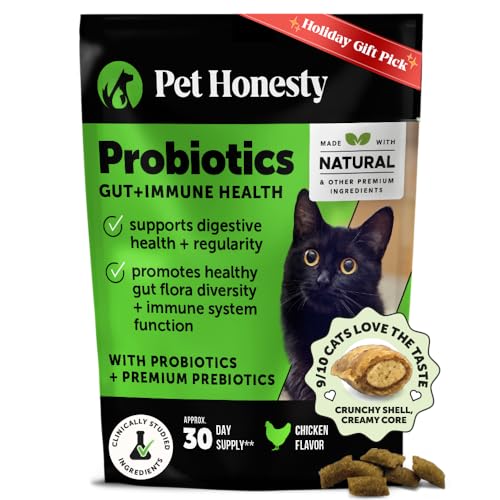
Pet Honesty’s probiotic chews emphasize a broader wellness approach, combining gut-supporting bacteria with prebiotics from chicory root to foster a diverse and balanced gut flora. The formula aims to reduce stomach upset, promote regularity, and support immune health. It’s positioned as suitable for daily use, after antibiotics, or during stressful periods when a cat’s digestive system may need extra care. The product earned recognition as a notable cat supplement, reflecting its emphasis on safe ingredients and reputable science-backed results.
Purina Pro Plan Veterinary FortiFlora Probiotics for Cats

FortiFlora is a veterinarian-recommended probiotic brand designed to support digestive health and balance in cats. It is widely noted for its efficacy in managing digestive upset and diarrhea, particularly in kittens and adult cats with sensitive stomachs. The product line emphasizes a trusted veterinary pedigree and is commonly used as a dietary supplement alongside regular cat foods. FortiFlora’s digestive care focus makes it a staple option for households seeking clinically backed probiotic support.
Probiotics For Cats For Digestive Support – SalutemPet

SalutemPet offers a liquid probiotic formulation designed to support digestive comfort in cats. The product emphasizes a combination of enzymes and prebiotics to enhance probiotic effectiveness, with the goal of easing colic-like symptoms, upset stomachs, gas, and bloating. Liquids can be easier to mix into meals for cats that resist pills or chews. This option appeals to owners seeking a flexible administration method and a formula designed to synergize with natural gut flora activation.
OKKÖBI Probiotics For Cats Chews

OKKÖBI’s cat probiotic chews are designed to support digestion and gut health with a blend that includes natural ingredients such as enzymes and probiotics in a tasty salmon flavor. The chews are marketed to help relieve tummy discomfort and support a robust immune system, making them convenient for daily use. The product emphasizes an easy administration experience and a cat-friendly taste that can ease routine supplementation.
Buying Guide: Key Purchase Considerations For Cat Probiotics
- Probiotic strains and CFU count: Look for products with well-researched strains (such as Lactobacillus and Enterococcus species) and a guaranteed CFU count. Higher counts aren’t always better for every cat, so consider gradual introduction and monitor tolerance.
- Form and ease of administration: Chews, powders, and liquids each have pros and cons. Chews are convenient for regular use but require cats to accept the treat. Powders mix into food but may be less consistent if your cat is a picky eater. Liquids can be easier to dose for cats who resist pills or solids.
- Prebiotics and enzymes: Prebiotics (like chicory root or FOS) help nourish beneficial bacteria. Some formulas also include digestive enzymes to support overall digestion and nutrient absorption.
- Veterinary guidance: If your cat has chronic digestive issues, autoimmune concerns, or is on medications, consult a veterinarian before starting a probiotic regimen to ensure compatibility with existing health plans.
- Length of use and maintenance: Probiotics can be used for short-term digestive upset or long-term gut health support. Some products are marketed as daily essentials, while others are intended for temporary use after illness or antibiotic therapy.
- Allergens and ingredients: Check for potential allergens or fillers. Choose products with transparent ingredient lists and minimal artificial additives for cats with sensitive stomachs.
- Safety and quality: Favor brands with clear labeling, quality controls, and veterinary backing. Certifications and NASC (National Animal Supplement Council) accreditation can signal product reliability.
- Flavor and palatability: If your cat is a finicky eater, choose flavors that appeal to felines (such as salmon) and consider gradual introduction to build acceptance.
- Cost and feeding guidelines: Compare serving sizes, monthly cost, and recommended daily use to estimate ongoing expenses. Consistency often yields better digestive outcomes over time.
- Return and dosing flexibility: Some cats may require adjustment in dosage. Flexible dosing formats help tailor the amount to weight, age, and digestive needs.
When selecting a probiotic for a cat, prioritize products with clear probiotic counts, validated strains, and complementary ingredients like prebiotics or enzymes. Regular monitoring of your cat’s stool quality, energy, and appetite is essential to determine whether a probiotic regimen is beneficial. If symptoms persist or worsen, seek veterinary attention promptly.