Best Motion Sensor Bird Repeller Solutions for Patios, Roofs, and Gardens
Protect outdoor spaces from birds without harming them using smart motion-activated deterrents. This guide highlights five reliable motion sensor bird repellers designed to cover patios, rooftops, gardens, and farms. Each option blends ultrasonic waves, lights, and movement detection to deter pigeons, sparrows, woodpeckers, geese, and more. Explore how these devices operate, their key strengths, and practical buying tips to choose the right model for your setup.
A quick summary of the chosen products:
- Lycxbfjia 2026 Solar Ultrasonic Bird Repellent — 3-in-1 deterrent with motion-activated LED flash and reflective windmill; solar and USB charging.
- Jahy2Tech 2026 New Solar Ultrasonic Bird Repellent — IP65 waterproof, 13.5kHz-45.5kHz frequency cycling, smart motion sensor up to 40 ft.
- Bird-X Balcony Gard — Ultrasonic, motion-sensing, covers up to 900 sq ft, adjustable frequency 15–25 kHz.
- ZLieatmp Upgraded Solar Bird Repellent — 120° motion detection, 40 ft range, frequency adjustability, solar with backup charging.
- OTSEZE 360° Solar Animal Repellent — Three-sided sensors, 360° coverage, 5 operating modes, flashing lights.
Lycxbfjia 2026 Solar Ultrasonic Bird Repellent

The Lycxbfjia device blends 5 ultrasonic modes with 5 sound options to deter a range of intruders including birds, cats, and bats. It features 9–45.5 kHz ultrasonic frequencies and optional sounds such as gunshots or animal calls to tailor deterrence. A 3-in-1 deterrent system combines sound with a reflective windmill and a 7-color LED strobe for a visible, non-electric cue at night. The 6V solar panel supports autonomous use, while a USB-C port enables rapid charging when needed. This makes it suitable for gardens, docks, and remote farms.
Key points to consider include the device’s multi-mode versatility, the 30-foot strobe reach, and its durable, weather-tolerant build. Users should plan gradual mode testing across several days to identify the combination that minimizes bird activity while avoiding human disturbance.
Features reference:
– 5 ultrasonic modes and 5 sound modes
– 9–45.5 kHz frequencies
– Reflective windmill and 7-color LED strobe
– Solar power with USB-C backup
Jahy2Tech 2026 New Solar Ultrasonic Bird Repellent
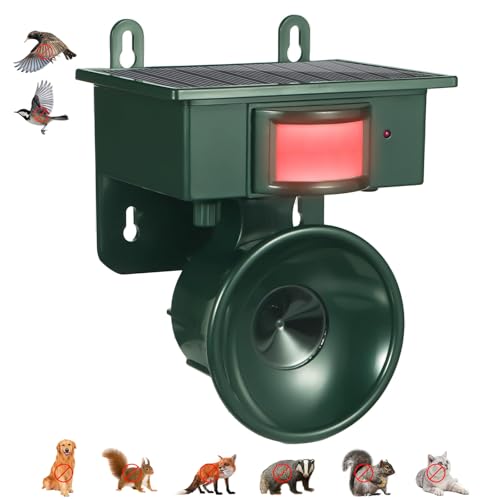
This upgraded Jahy2Tech model uses Frequency Swapping Technology, cycling through 13.5 kHz to 45.5 kHz to prevent birds from developing immunity to a single tone. The device is IP65 waterproof and built to endure sun and rain, with anti-UV ABS housing. A high-efficiency PIR sensor detects movement within a 120° arc up to 40 feet, triggering deterrence only when needed to maximize efficiency. It’s designed for roofs, porches, balconies, and large outdoor spaces where birds roost or nest.
Key considerations include long-term effectiveness through frequency cycling, weather resistance, and a robust motion detection range. For best results, place the unit where birds commonly land and test different frequencies over several weeks to identify the most effective setting.
Features reference:
– Frequency cycling from 13.5–45.5 kHz
– 120° PIR sensor, up to 40 ft detection
– IP65 waterproof, anti-UV ABS construction
Bird-X Balcony Gard Ultrasonic Bird Preventer

The Bird-X Balcony Gard focuses on a silent-to-humans frequency range (15–25 kHz) to deter birds while remaining low-profile for human environments. It covers up to 900 square feet, making it suitable for balconies, porches, rooftops, and pools. The device offers adjustable frequency and a 90 dB sound output at 1 meter, with low power draw. It’s designed as a weather-resistant, programmable deterrent for persistent birds like pigeons, crows, and gulls, plus some small mammals or bats.
Important aspects include its practical coverage area, gentle human-auditory profile, and multi-species deterrence capability. For best performance, pair it with physical barriers or alarms in high-traffic areas and monitor bird responses over several weeks to refine the settings.
Features reference:
– Adjustable 15–25 kHz frequency
– Coverage up to 900 sq ft
– 90 dB at 1 meter, low current draw
ZLieatmp Upgraded Solar Bird Repellent Outdoor
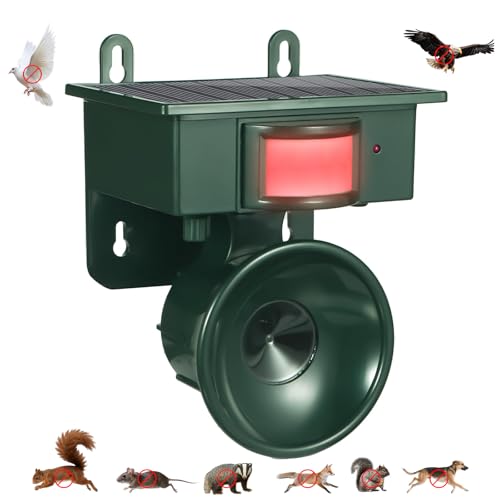
The ZLieatmp model emphasizes 2026 enhancements with a longer 120° detection angle and an extended 40-foot range. The device supports 5,000 sq ft coverage and offers a frequency dial to adjust the ultrasonic output, enabling it to operate as both a bird deterrent and a versatile big-game deterrent in larger properties. A solar panel powers automated operation, with a backup adaptor for manual charging during extended cloudy periods. The design focuses on long-term, adaptable deterrence for farms, gardens, and rooftops.
Key considerations include how often birds adapt to a given frequency, the importance of adjusting sensitivity, and the practicality of manual charging options during heavy overcast periods. For best results, map out high-traffic roosting spots and calibrate the device to start with moderate frequency and motion sensitivity, then refine.
Features reference:
– 120° detection, up to 40 ft
– 5,000 sq ft coverage
– Frequency adjustability and solar with back-up charging
OTSEZE 360° Solar Animal Repellent

The OTSEZE device uses three infrared sensors to create 360° coverage with up to 26–30 feet of detection range. It offers five working modes, including multiple ultrasonic frequencies and three flashing light patterns to deter a broad range of animals, from birds to mammals. The system includes alarm sounds and flashing lights to create a multi-sensory deterrent, which is useful for yards, orchards, and garden spaces needing comprehensive protection. The solar-powered design supports continuous operation with a practical backup option for limited sun.
Key considerations include ensuring the 360° field covers known roosting zones, balancing motion-triggered deterrence with energy consumption, and selecting a mode set that targets the primary intruders in your location. Place the device away from petals or delicate plants to minimize false triggers from wind or passing wildlife.
Buying Guide: Choosing The Right Motion Sensor Bird Repeller
When selecting a motion sensor bird repeller, consider these core factors to ensure effective long-term performance:
- Detection range and field of view: A wider range helps cover rooftops, balconies, and large yards. Look for devices with PIR sensors that detect significant movement (not mere branches in the wind).
- Frequency strategy: Models that cycle frequencies (e.g., 13.5–45.5 kHz) reduce bird habituation. If possible, choose a device offering frequency adjustments and cycling features.
- Power source and reliability: Solar-powered units with USB backup or manual charging offer the best uptime. Check IP ratings (IP65 or higher) for weather resistance in rain and sun.
- Multi-sensory deterrence: Combining ultrasonic sound with flashing lights or reflective windmills increases deterrence without increased human exposure.
- Coverage area vs. placement: For large properties, prefer units with 2,000–5,000 sq ft coverage and consider multiple units for 360° protection.
- Durability and UV resistance: Outdoor devices must withstand sun, rain, and temperature changes. Anti-UV materials extend service life.
- Mode customization: Depending on the target species, you may need adjustable frequencies, different sounds, and different light patterns. Plan a testing period of 2–4 weeks per mode.
- Ease of installation: Look for weatherproof housings, simple mounting, and clear instructions. Consider devices that blend with building exteriors to reduce aesthetic concerns.
- Animal welfare and safety: Choose devices that deter without causing harm. Follow any local guidelines regarding deterrent devices and wildlife protection.
Compared to non-sensor options, motion-activated deterrents generally offer more efficient energy use and targeted responses. For best results, deploy multiple units at primary roosting spots, then adjust modes incrementally while monitoring bird activity over several weeks. Pair deterrents with physical barriers like netting or spikes where birds repeatedly roost in vulnerable areas.