Best Low Fat Diet for Dogs With Pancreatitis: Practical Options and Guidance
Managing pancreatitis in dogs often means selecting a low-fat, highly digestible diet to reduce stress on the pancreas while maintaining essential nutrition. The following products are commonly recommended by veterinarians for digestive health and fat control. This article reviews five widely available options, highlighting their key features and practical considerations for American pet owners navigating dietary needs.
Summary Table Of Chosen Products
| Product | Type | Size / Packaging | Key Benefit |
|---|---|---|---|
| Hill’s Prescription Diet i/d Low Fat Digestive Care Chicken Flavor Dry Dog Food | Dry, Veterinary Diet | 8.5 lb Bag | Specialized for digestive health with low fat formulation |
| Purina EN Gastroenteric Low Fat Canine Formula Dry | Dry, Veterinary Diet | 25 lb Bag | Low fat, supports GI health and nutrient absorption |
| SquarePet Veterinarian Formulated Low Fat Whitefish Dry Dog Food | Dry, Veterinary Formulation | 4.4 lb Bag | Low fat, highly digestible with sustainable protein |
| Hill’s Prescription Diet i/d Low Fat Digestive Care Rice, Veg & Chicken Stew Wet | Canned, Veterinary Diet | 12 Pack, 12.5 oz Cans | Moist, highly digestible, supports digestion and fat control |
| Blue Buffalo Natural Veterinary Diet GI Gastrointestinal Support Low Fat Dry | Dry, Veterinary Diet | 6 lb Bag | Whitefish-based, GI support with natural ingredients |
Hill’s Prescription Diet i/d Low Fat Dry Dog Food (8.5 lb)

Hill’s Prescription Diet i/d Low Fat Digestive Care Chicken Flavor Dry Dog Food is formulated by Hill’s nutritionists and veterinarians to support digestive health while maintaining a low-fat profile. The product is clinically tested to help settle fat-responsive digestive upsets and is described as highly digestible. This option is typically used under veterinary guidance for dogs with pancreatitis or other fat-sensitive GI issues. Consider layering with wet food if appetite or hydration is a concern, and monitor fat intake alongside any prescribed therapies.
Purina EN Gastroenteric Low Fat Dry Canine Formula

Purina Pro Plan Veterinary Diets Gentle Snackers Hydrolyzed Plus Low Fat Dog Treats are mentioned here for context, but the primary product is Purina EN Gastroenteric Low Fat Dry Canine Formula. This lean, low-fat dry food is designed to support GI health and nutrient absorption, making it a suitable option for dogs with fat intolerance. It’s important to follow veterinary guidance on feeding quantities and to transition slowly from any prior diet to avoid GI upset.
SquarePet Low Fat Whitefish Dry Dog Food

SquarePet Veterinarian Formulated Solutions Low Fat Content Lean Whitefish is a dry dog food crafted to be low fat and highly digestible, featuring whitefish as the protein source. It targets dogs that may have trouble digesting fats and includes a sustainable protein approach. The formulation emphasizes digestibility and GI comfort, aligning with pancreatitis management goals.
Hill’s Prescription Diet i/d Low Fat Wet Canine Diet (12.5 oz Cans)

Hill’s Prescription Diet i/d Low Fat Digestive Care Rice, Vegetable & Chicken Stew Wet Dog Food provides a moist option with the same low-fat, highly digestible profile designed for dogs with GI disorders. Canned formulas can aid in hydration and palatability, which may be beneficial for picky eaters or dogs with reduced appetite during pancreatitis flare-ups. As with dry options, this should be used under veterinary supervision and as part of a broader dietary plan.
Blue Buffalo Natural Veterinary Diet GI Gastrointestinal Support Low Fat Dry
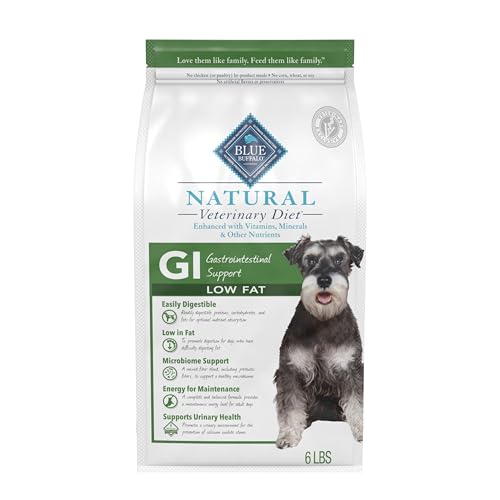
Blue Buffalo Natural Veterinary Diet GI Gastrointestinal Support Low Fat Dry is formulated to help manage sensitive stomachs and promote digestion with easily digestible ingredients. The recipe centers around real whitefish as a protein source, with added prebiotic fibers to support GI microflora balance. This option emphasizes natural ingredients while maintaining a low-fat approach for pancreatitis management.
Buying Guide: Key Considerations For Low-Fat Diets In Pancreatitis
- Vet Guidance And Diagnosis: Pancreatitis severity varies. Always follow a veterinarian’s diagnosis and guidance on fat limits, protein levels, and caloric needs. Some dogs may require prescription diets while others benefit from veterinary-formulated, non-prescription options.
- Low-Fat Formulation Accuracy: Check labels for fat content and guaranteed analysis. Look for diets explicitly labeled as low fat or designed for fat-restricted GI conditions. Avoid accidental high-fat ingredients.
- Digestibility And Protein Source: Choose easily digestible proteins (such as whitefish or hydrolyzed proteins) and digestible carbohydrate sources. Highly digestible formulas help reduce stool volume and GI distress.
- Wet vs Dry Options: Wet foods can improve palatability and hydration, while dry foods often support dental health and convenience. Some dogs benefit from a combination approach as they transition to a low-fat diet.
- Palatability And Acceptance: If a dog is reluctant to eat, trial flavors or textures recommended by a vet can help. A gradual transition reduces GI upset during the switch.
- Monitoring And Transition: Introduce new diets gradually over 7–14 days. Monitor symptoms such as vomiting, diarrhea, appetite changes, and weight. Dose adjustments may be needed based on response.
- Convenience And Availability: Consider product availability, packaging size, and your ability to store. Prescription diets may require veterinary authorization or specific retailers.
- Hydration And Fiber: Adequate hydration and appropriate fiber levels support GI health. Some patients benefit from canned options or moisture-rich meals.
- Long-Term Plan: A pancreatitis-friendly plan often involves ongoing monitoring, regular vet visits, and a combination of diet, medications, and lifestyle adjustments.
- Allergen Considerations: If food sensitivities exist, hydrolyzed protein or limited-ingredient formulas can be appropriate. Always verify ingredient lists for potential triggers.
Note: This article provides general information and is not a substitute for professional veterinary advice. Always consult with a veterinarian to tailor a diet to your dog’s health status, pancreatitis history, and nutritional needs.