Best Indoor Desert Tortoise Habitat Options for 2026
Finding the right indoor habitat for a desert tortoise requires balancing space, durability, and ease of cleaning. This guide highlights five top-rated enclosures that help mimic a tortoise’s natural behaviors while keeping maintenance manageable. Each option supports lighting, ventilation, and enrichment ideas suitable for small to medium tortoises and other similar reptiles or small pets. Whether you’re creating a temporary setup or a long-term home, you’ll want sturdy construction, accessible cleaning trays, and room for thermal gradients.
| Product | Brand | Key Benefit | Notable Feature |
|---|---|---|---|
| BIRASIL Wood Tortoise House | BIRASIL | Two-room design with light-blocking hide space | Detachable legs and versatile indoor/outdoor use |
| GEGURI Tortoise Habitat Indoor & Outdoor | GEGURI | Two-room layout with flexible placement | Detachable legs and pull-out tray for easy cleaning |
| Aivituvin Wooden Tortoise House Large | Aivituvin | Indoor/outdoor versatility with weatherproof bottom | Adjustable lamp holder and solid wood construction |
| MOGUOBIN Tortoise Habitat | MOGUOBIN | Three-room design with large viewing windows | Detachable legs; enhanced sunlight exposure |
| BestPet Wooden Tortoise Habitat | BestPet | Transparent viewing with two zones for activity/rest | Removable trays and metal mesh top for cleaning |
Below are the detailed profiles of each enclosure, focusing on structure, usability, and how they suit an indoor desert tortoise setup. Each section discusses space, materials, and maintenance considerations to help you compare options quickly and accurately.
BIRASIL Wood Tortoise House Review

The BIRASIL enclosure is marketed as a multifunctional habitat suitable for tortoises and other small animals. Its two-room design supports a discreet resting area and an open section for activity, aligning with natural tortoise behavior. The product highlights detachable legs, enabling placement on tables or floors, which makes it adaptable for apartment setups or sunning areas on pleasant days. The design emphasizes warmth and enclosure privacy, essential for desert tortoises that benefit from a sheltered sleeping area. If you plan to use it indoors year-round, prioritize a reliable heat source and a safe, moisture-controlled substrate to prevent dampness. The cage’s broader footprint supports movement and enrichment options like simple tunnels and plants, which can improve activity levels.
GEGURI Tortoise Habitat Indoor & Outdoor

GEGURI’s wooden enclosure emphasizes premium solid wood construction with a two-room layout, offering a private sleep area and a public viewing space. The detachable legs provide placement flexibility on a table or the ground, making it suitable for rooms with varying layouts or multi-season use. A notable feature is the pull-out tray, which facilitates cleaning and maintenance by containing dirt and moisture in a contained space. The overall build is designed to resist warping and sustain long-term use, which is important for desert tortoises that thrive with dry, stable conditions. When choosing this model, ensure your heat and UVB lighting plan compensates for indoor environments where natural sunlight can be limited.
Aivituvin Wooden Tortoise House Large
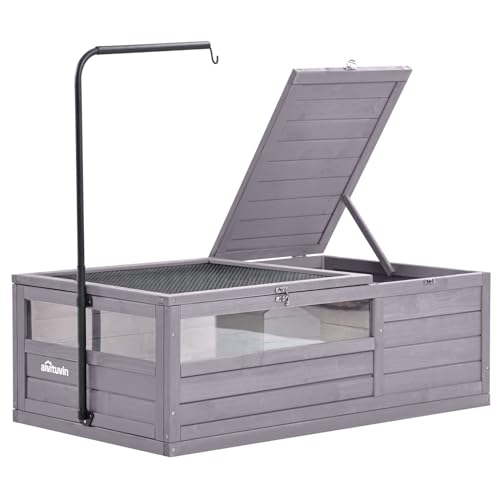
This Aivituvin model is designed for indoor or outdoor use, with a bottom that is surrounded to prevent dirt from falling through. The product emphasizes the use of solid wood rather than plywood, which can warp under humidity and regular droppings, offering better durability for desert tortoise habitats. An adjustable lamp holder is included to help regulate the pet’s health with appropriate heat and light distance. For desert tortoises, proper illumination and a consistent day-night cycle are crucial; ensure your setup includes UVB lighting and a reliable heat source to mirror arid day conditions. The enclosure supports easy cleaning with accessible trays, which is a practical benefit for busy caretakers.
MOGUOBIN Tortoise Habitat

The MOGUOBIN enclosure stands out with a three-room design, creating a dedicated resting area and a visually connected play space. Its large dimensions—47.2” long by 15.7” wide by 20.5” high—provide substantial room for movement and exploration, which is beneficial for a growing tortoise. The detachable legs add placement versatility, letting you elevate the habitat for easier cleaning or to optimize sunlight exposure. Three acrylic observation windows improve visibility for monitoring and enrichment without disturbing the pet. Maintenance is supported by a secure moisture management approach, though it remains important to monitor humidity levels to avoid overly damp substrates in an indoor environment.
BestPet Wooden Tortoise Habitat

BestPet’s wooden enclosure emphasizes observation and interaction with large side windows, aiding caretakers in monitoring and engaging with the tortoise. The two-area partition—rest area and activity area—mirrors the natural behavior of many tortoise species by offering a private shelter and an open space for movement. A metal mesh top enhances ventilation while the removable trays and top access design simplify cleaning and maintenance. This model is well-suited for hobbyists who want clear visibility and straightforward upkeep. For indoor desert tortoise care, pair this habitat with a robust lighting plan, including a UVB source, and a warm basking zone to support shell and spine health.
Buying Guide: Key Purchase Considerations for Indoor Desert Tortoise Habitats
- Size and expansion potential: Desert tortoises grow and need space to roam. Look for enclosures with multiple zones and ample floor area, plus the option to extend with modular add-ons or bigger bases as needed.
- Material durability: Solid wood constructions resist warping and stand up to humidity and waste better than plywood. Ensure water resistance or a water-safe bottom tray for easy cleaning.
- Ventilation and light: Adequate airflow reduces mold risk, while a plan for UVB and heat lamps creates a day-night cycle that mimics desert conditions and supports shell health.
- Cleaning and maintenance: Removable trays, accessible hoods, and smooth interior surfaces minimize effort. A pull-out or leak-proof tray helps manage moisture and substrate hygiene.
- Accessibility and placement: Detachable legs or adjustable heights allow placement on tables or floors. Consider location where you can easily monitor and interact with your pet.
- Enrichment options: Tunnels, hides, and safe plants provide behavioral stimulation. Leaving space for excavations or digging substrates can foster natural behaviors.
- Safety features: Ensure secure latches, non-toxic paints or finishes, and no sharp edges. Wood finishes should be free from volatile compounds that could irritate reptiles.
- Cleaning schedule: Daily spot-cleaning plus weekly substrate changes help prevent odor and bacterial buildup. Look for trays and trays with simple cleaning routines.