Best Heat Bulb for Leopard Gecko: Top Reptile Heating Lamps for Thermoregulation
Leopard geckos require reliable heat sources to maintain their body temperature and support healthy digestion and activity. The following picks represent popular heat bulbs and emitters designed to create a stable basking spot, nighttime warmth, or UVA/UVB supplementation. Each product is evaluated for effective heat distribution, durability, and suitability for geckos in home terrariums. The selections aim to balance daytime basking with safe nocturnal periods, helping keep geckos active and comfortable.
Summary of Selected Products
| Product | Brand | Type | Key Benefit | Approximate Wattage |
|---|---|---|---|---|
| Fluker’s Incandescent Basking Spotlight Bulbs | Fluker’s | Incandescent Spotlight | Directs heat for basking; infrared light support | 75 |
| MCLANZOO Infrared Heat Lamp Bulbs 75W (2 Pack) | MCLANZOO | Infrared Heat Bulb | Red infrared for warmth with long service life | 75 |
| ReptiKing Reptile Heat Lamp 75W (2 Pack) | ReptiKing | Intense Basking & Infrared | Narrow beam for efficient basking; 24-hour cycles | 75 |
| LUCKY HERP Ceramic Heat Emitter 150W (2-Pack) | LUCKY HERP | Ceramic Heat Emitter | No light, pure heat; long-lasting | 150 |
| TobeBright Red Reptile Heat Bulb 100W (2 Pack) | TobeBright | Infrared Heat Bulb | Night warmth without disturbing sleep | 100 |
Fluker’s Incandescent Basking Spotlight Bulbs for Reptiles

Fluker’s Incandescent Spotlight Bulbs are designed to deliver targeted heat for reptile basking areas. With a 75-watt rating, these bulbs emit infrared light to help reptiles regulate core body temperature. The spotlight design concentrates heat and light toward a specific area, supporting efficient basking and aiding in maintaining a stable microclimate within the gecko’s enclosure. Suitable for providing a reliable day heat source while complementing ambient terrarium conditions. Durable and widely used, these bulbs are a straightforward choice for leopard gecko setups that require a consistent basking zone.
MCLANZOO Infrared Heat Lamp Bulbs 75W (2 Pack)
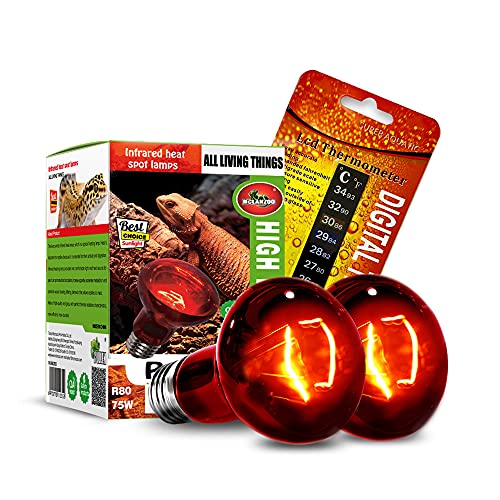
This red infrared heat bulb is designed to increase the overall tank temperature, creating a warm and comfortable habitat for reptiles, including leopard geckos. The bulbs are built for a long service life (around 3000 hours) and feature an E26 standard socket for broad compatibility with lamp holders. The red infrared light provides nocturnal warmth while keeping light levels minimal, helping preserve the gecko’s natural activity cycle. This option balances daytime heating with non-disruptive nighttime warmth.
ReptiKing Reptile Heat Lamp 75W

The ReptiKing 75W heat lamp focuses heat for a defined basking area, supporting thermoregulation in bearded dragons, geckos, and other reptiles. It aims to simulate natural sunlight by delivering a concentrated heat beam, which helps establish hot and cold zones inside the terrarium. The product emphasizes compatibility with 24-hour cycles when paired with other heating or night-emitting devices, enabling a versatile day-night heating plan for leopard geckos.
LUCKY HERP Ceramic Heat Emitter 150W (2-Pack)
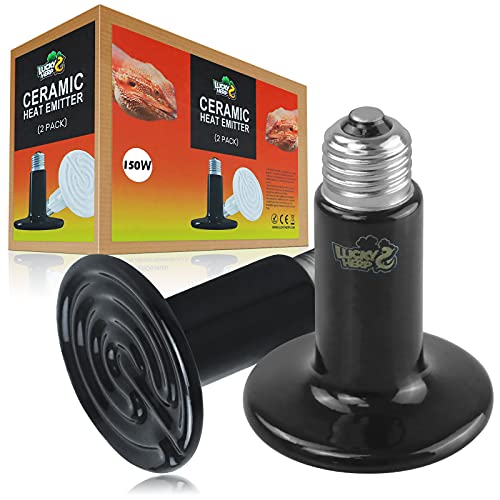
The ceramic heat emitters from LUCKY HERP provide heat without light, making them ideal for overnight use without disturbing nocturnal geckos. With a 150-watt rating, these emitters distribute steady warmth that helps maintain stable temperatures. Ceramic heat is durable, long-lasting, and compatible with standard E26 bases, offering a reliable source of background heat or a primary heat source in larger enclosures where a bright bulb might be undesirable.
TobeBright Red Reptile Heat Bulb 100W

The TobeBright red infrared heat bulbs are designed to deliver night warmth while avoiding disruptive light for leopard geckos. The 100-watt bulbs provide a steady thermal source, helping geckos thermoregulate during nocturnal hours. The product notes caution regarding safe operation, including maintaining a proper distance from the enclosure and using compatible fixtures to prevent overheating or voltage fluctuations. This option is suitable for nighttime heating where subtle light is preferred.
Buying Guide: Key Purchase Considerations
- Heat type and purpose: Decide between incandescent basking bulbs for daytime heat, infrared heat bulbs for night warmth, and ceramic emitters for no-light heat. Mixing a basking bulb with a night-specific heat source is common for leopard geckos.
- Wattage and beam focus: Higher wattage provides more heat but can create hotspots. For leopard geckos in standard 20–40 gallon terrariums, 50–75W basking lamps are typical; 75–150W ceramic emitters are used in larger tanks or for supplementary heat.
- Light emission: If nocturnal behavior is a concern, prefer red infrared bulbs or ceramic emitters that emit little to no visible light, preventing disruption to sleep cycles.
- Duration and cycling: Some setups pair heat lamps with a day-night timer to mimic natural cycles. Ensure compatibility with other devices for 24-hour cycles if needed.
- Durability and lifespan: Look for bulbs rated for thousands of hours. Long-lasting emitters reduce maintenance and replacement costs.
- Compatibility and safety: Confirm socket compatibility (E26 is common) and observe recommended distances from the basking area. Use proper fixtures and avoid overheating by following manufacturer guidance.
- Terrarium size and enclosure design: Larger enclosures may require multiple heat sources or a stronger emitter. Consider reflector fixtures to direct heat effectively.
- Combination with UV: Some reptiles benefit from UVA exposure; evaluate whether your enclosure needs a separate UVB/UV fixture in addition to heat sources.
- Installation and monitoring: Use a reliable thermometer and hygrometer near the basking site to monitor temperature gradients and adjust heat as needed.
- Cost of ownership: Compare initial cost, bulb longevity, and replacement frequency to estimate long-term expenses for your gecko setup.
In summary, the best heat bulb for a leopard gecko depends on your terrarium size, desired day-night cycle, and whether you prefer heat with or without visible light. A layered heating approach—combining a basking heat source with a quiet night heat emitter—tends to deliver stable thermoregulation while minimizing disturbance to the gecko’s natural behavior.