Best Hay for Horses in Winter: Reliable Slow-Feed Options and Durable Bales
Winter hay management is essential for maintaining a horse’s digestion, hydration, and nutrient intake. The right slow-feed hay bags minimize waste while keeping horses engaged during long indoor periods. The following selections emphasize durability, ease of use, and steady feeding, helping stable managers cut down on chores and keep horses healthy during cold months.
The table below summarizes five top picks chosen for winter feeding, highlighting what makes each suitable for horses in varying environments—stables, trailers, and pastures. Use this quick reference to compare design, capacity, and ease of use at a glance.
| Product | Brand | Key Benefit | Hole Size / Capacity | |
|---|---|---|---|---|
| Hay Chix Hay Net | hay chix | Half bale slow feeding for reduced waste | 1 3/4″ holes; holds 4-6 flakes | PATENTED rope & Hoggle closure; UV treated nylon |
| MIYABALA Round Bale Net | MIYABALA | Long bale feeding with slow-feed design | 1.5″ holes; 5×5 ft round bale | Knotless design for safety |
| Derby Originals Front Web Slow Feeder | Derby Originals | Durable front-load slow feeder for quick use | 1.75″ openings; holds 2-3 flakes | Super Tough Bottom; replaceable parts |
| MIYABALA Large Slow Feed Bags | MIYABALA | Large capacity for extended feeding | Large cylindrical; high capacity | Drawstring, adjustable strap; oxford cloth |
| Schneiders Slow Feed Hay Ball | Schneiders | Compact slow-feed ball for stall stalls | 2.5″ holes | Durable polyethylene; easy lid access |
The following sections describe each product in detail, with objective notes on design, practical use, and who benefits most from each solution. Consider your horses’ size, feeding pace, and stable layout when selecting a model.
Hay Chix Hay Net For Horses

The Hay Chix Half Bale Slow Feed Hay Net is built from marine-grade nylon that’s UV-treated, helping it resist sun and weather exposure. With 1 3/4-inch holes, it accommodates half bales (approximately 4–6 flakes) and supports natural grazing while reducing waste. The patented rope and Hoggle closure system makes filling straightforward and secure, which is practical for routine chores. The net’s portability adds value for trailers and outdoor turnout, enabling stable staff to feed efficiently on the road or at home.
Use case considerations: This net suits owners who routinely feed half-bale portions, want reliable closure mechanisms, and need a sturdy option for travel. Its durable construction and predictable hole size help horses eat at a comfortable pace without gulping large amounts of hay.
Horse Bucket Strap By Hay Chix

The Hay Chix Multi-Purpose Water Bucket Hanger is designed to secure buckets, harnesses, or other stall items. While not a feeding bag itself, this accessory improves barn organization and can help keep water or feed stations neat in winter conditions when outlets and hoses need careful arrangement. Its adjustable strap length makes it versatile for various stall setups and trailer interiors, offering practical support for stable management during colder months.
Use case considerations: This strap is best for barns needing flexible hanging solutions for water, feeders, or drying gear. It’s a complement to slow-feed nets, assisting with stable organization in tight winter spaces.
MIYABALA Round Bale Hay Net
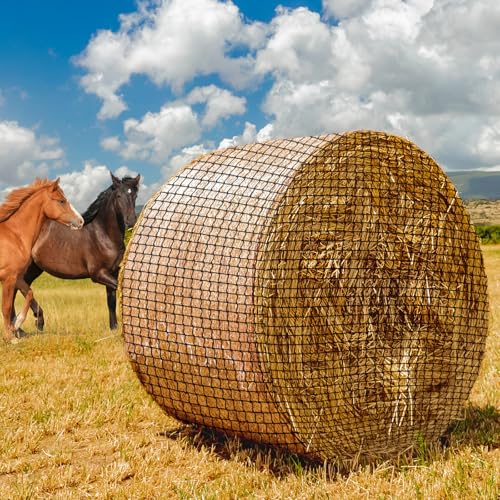
This MIYABALA round bale hay net is designed to fit round bales with a 5×5-foot footprint, offering a sharp balance between capacity and slow feeding. The 1.5-inch hole size promotes natural grazing while minimizing hay waste. A knotless design reduces the risk of tangling, making it safer for horses that tend to chew or rub nets. The net’s durable materials and knotless construction contribute to longevity in winter use when stable conditions can be harsh and require resilient gear.
Use case considerations: Suitable for farms using large round bales and seeking an extended feeding period without constant refilling. The knotless construction adds a safety margin for horses prone to snagging nets during windy or damp winter days.
MIYABALA Hay Bags For Horses, Large Slow Feed
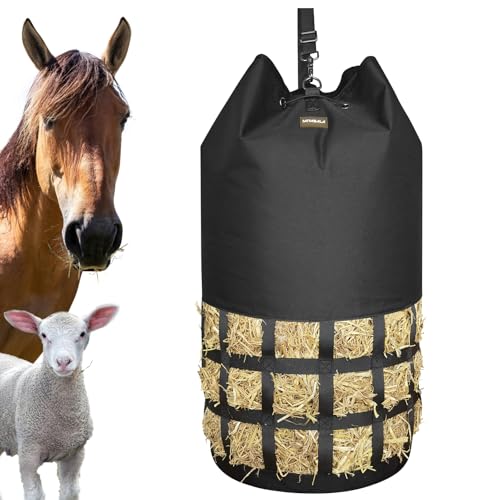
These MIYABALA hay bags offer a large cylindrical design with a wide opening and a drawstring closure, plus an adjustable strap for hanging. Made from premium oxford cloth, they emphasize durability and resistance to wear and tear. The design supports slow feeding across a longer period, which is especially useful for horses that require steady hay intake during extended turnout or stall time. The bag’s generous depth helps distribute hay evenly for an extended grazing experience while minimizing waste.
Use case considerations: Ideal for larger horses or groups where extended feeding is necessary, and for users who want a robust bag that withstands daily rough use. The drawstring and strap provide flexible placement in stalls or trailers and help ensure the contents feed gradually over time.
Schneiders Slow Feed Hay Ball Feeder

The Schneiders Slow Feed Hay Ball is a compact option with 2.5-inch holes engineered to slow hay consumption, keeping horses occupied longer and reducing rapid eating. Constructed from durable polyethylene, this feeder resists daily wear in stalls or paddocks. A screw-top lid facilitates easy loading and ensures hay stays contained during movement or transport. This model is well-suited for smaller stalls or horses that benefit from a contained feeder that still allows natural grazing behavior.
Use case considerations: Suitable for smaller spaces, barns requiring a simple, low-maintenance feeder, or horses that benefit from a contained slow-feed approach. The ball design can also be helpful for bored horses, providing a tangible objective during feeding time.
Buying Guide: Key Purchase Considerations
When selecting hay feeding gear for winter, stability, safety, and feeding pace are crucial. Consider hole size carefully: smaller holes slow intake but may frustrate very hungry or larger horses; larger holes feed quicker but increase waste. Durability matters in cold, damp environments, so UV resistance, reinforced stitching, and knotless or reinforced bottoms can extend service life. Capacity should align with daily feeding needs and turnout duration—larger bags reduce refilling but may require more space and careful hanging. Accessibility and cleaning ease are also important for daily routines and seasonal maintenance. Finally, compatibility with travel and trailer use can be a decisive factor for those who haul to shows or winter grooms.
Another perspective focuses on safety. Knotless nets reduce snagging risk for horses with sensitive mouths or those prone to entanglement. Adjustable straps and easy closures improve handling in winter gloves, while replaceable parts protect long-term investment. Weight distribution and mounting options influence where nets can be securely placed, especially in draftier weather or slap-back winds. For owners prioritizing minimal hay waste, slow-feed designs with precise hole sizes offer predictable consumption patterns and cost efficiency over the season.
In practice, users should balance cost with longevity. A slightly higher upfront price can translate into fewer replacements and a longer lifespan, especially for active barns with multiple horses. Finally, consider the typical bale size in your operation (half-bale, small square, or round bale) to ensure the selected net matches your standard feeding material for winter compatibility.