Best Gastrointestinal Biome Canned Cat Food Options
Choosing a GI-focused diet for cats can help support digestive health and a balanced gut microbiome. This guide highlights five canned options designed to aid digestion, reduce stress-related upset, and promote regular stools. Each product is formulated with digestive fibers, prebiotics, and stress-reducing ingredients to support gut and overall health in cats.
Overview of selected products:
| Product | Brand | Can Size / Type | Key Benefit |
|---|---|---|---|
| Gastrointestinal Biome Stress Digestive/Fiber Care Wet Cat Food, Chicken & Vegetable Stew | Hill’s Prescription Diet | 2.9 oz cans, Wet | Supports digestive health and stress reduction |
| Gastrointestinal Biome Digestive/Fiber Care Wet Cat Food, Chicken & Carrot Stew | Hill’s Prescription Diet | 2.8 oz pouches, Wet | Promotes regular stools; ActivBiome+ technology |
| Gastrointestinal Biome Stress Digestive/Fiber Care Wet Cat Food, Chicken & Vegetables Minced | Hill’s Prescription Diet | 2.9 oz cans, Wet | Reduces stress; supports gut health |
| Gastrointestinal Support Wet Cat Food, Chicken | Blue Buffalo | 5.5 oz cans, Wet | Prebiotic fibers; GI microflora support |
| Sensitive Stomach & Skin Wet Cat Food, Salmon & Vegetables Minced | Hill’s Science Diet | 2.9 oz cans, Wet | Digestive support with prebiotics and skin health |
Hill’s Prescription Diet Gastrointestinal Biome Stress Wet Cat Food

Contains hydrolyzed casein and L-tryptophan to help reduce stress, while supporting digestive health. Clinically shown to promote regular healthy stool in as little as 24 hours and help reduce recurrence of digestive upsets.
Hill’s Gastrointestinal Biome Wet Food with Chicken & Carrot Stew

Uses ActivBiome+ technology to rapidly activate beneficial gut bacteria and support a healthy GI microbiome balance. Formulated to support digestive health in dogs as well as cats, with a focus on stress reduction and ease of digestion.
Hill’s Gastrointestinal Biome + Stress Wet Cat Food
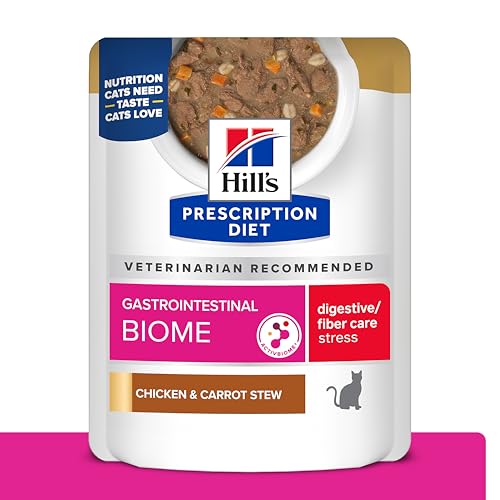
Combination formula designed to support digestive health while addressing stress-related gut issues. Clinically shown to promote regular stools and reduce recurrence of digestive upsets, using hydrolyzed casein and L-tryptophan for stress relief.
Hill’s Prescription Diet Gastrointestinal Biome Dry Cat Food

Dry formulation to support digestive health and stress reduction, including hydrolyzed casein and L-tryptophan, with clinical nutrition designed to promote regular stools and lower recurrence risk.
Hill’s Gastrointestinal Biome Stress Dry Cat Food

Dry formula with a focus on stress management and gut health, leveraging hydrolyzed proteins and prebiotic fibers to support a balanced microbiome and comfortable digestion.
Hill’s Science Diet Sensitive Stomach & Skin Wet Cat Food

Precise balance and highly digestible ingredients for sensitive stomachs and skin. Includes prebiotic fiber to fuel beneficial gut bacteria and support a balanced microbiome, plus Omega-6s and Vitamin E for coat health.
Blue Buffalo GI Gastrointestinal Support Wet Cat Food

Real meat first can aid palatability while GI-focused ingredients help balance gut flora. Prebiotic fibers support healthy microbiome and antioxidant nutrients bolster immune health.
Hill’s Science Diet Sensitive Stomach & Skin Wet Cat Food

Salmon and vegetables minced provide digestibility and palatability, with prebiotic fibers to support gut bacteria and a balanced microbiome, plus skin-supporting nutrients.
Buying Guide: Key Considerations for GI Biome Cat Foods
- Digestive health goals: Identify whether the priority is stress reduction, stool regularity, or balancing gut flora. Many formulas combine hydrolyzed proteins, prebiotics, and stress-reducing ingredients.
- Wet vs dry balance: Wet canned options offer moisture and are often easier to chew and digest, while dry foods can complement a GI plan when paired with adequate hydration.
- Protein sources: Look for high-quality animal proteins and limited ingredients if sensitivity is suspected. Hydrolyzed proteins can reduce allergen exposure.
- Prebiotic fibers and ownership of microbiome: Prebiotics like FOS or inulin can support beneficial bacteria, contributing to a healthier gut ecosystem.
- Veterinary guidance: Prescription GI formulas may be recommended for certain conditions; follow a veterinarian’s plan for chronic digestive issues.
- Palatability and acceptance: If a cat refuses food, transition gradually and consider flavor variants to maintain adherence to the GI diet.
- Monitoring outcomes: Track stool quality, frequency, appetite, and weight over several weeks to assess efficacy and adjust as needed.