Best Float Switches for Aquarium: Top Water Level Control Devices
Maintaining stable water levels is essential for healthy aquarium life. Float switches automate top-off and pump control, reducing the risk of overflows or low-water events. This guide highlights five reliable float switch solutions from Amazon, covering plastic and metal designs, vertical and top-off configurations, and safety-focused options. Each pick is evaluated for durability, ease of installation, and suitability for fish and corals. Use the buying guide to compare features and choose the right sensor for your setup.
Summary Table of Selected Products
| Product | Brand | What It Is | Key Strengths |
|---|---|---|---|
| Liyafy 5 Pcs Right Angle Float Switch | Liyafy | Right-angle water level sensors for aquariums | |
| Walfront Float Switch, Vertical Water Level Sensor | Walfront | Vertical float switch for pumps and valves | |
| Gionatio Auto Top Off Safety Switch | Gionatio | High water level safety switch for ATO systems | |
| AquaticLife Float Valve Kit for RO & RO/DI | Aquatic Life | Auto-fill float valve kit for tanks and aquariums | |
| MARSTEK Float Switch with 10ft Cable | MARSTEK | Long-cabled, IP68 float switch for sump and tanks |
Liyafy 5 Pcs Right Angle Float Switch

This kit provides five white and yellow right-angle float switches designed for water level sensing in aquariums. The DP3500 model supports up to 10W max contact rating and 0.5A switching current, with a 220V DC breakdown voltage. The package contents include 5 water level sensors, offering a cost-effective solution for multi-tank or modular setups. The compact design is suitable for tight sump spaces and standard 1/2 inch fittings in hobbyist systems.
Piutouyar 2 Pack PP Float Switch
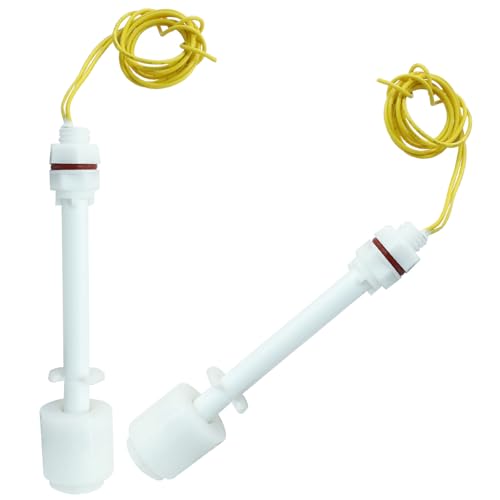
The Piutouyar set includes two PP plastic float switches with robust longevity. Both the float ball and body resist environmental factors, and the device uses a magnetic spring switch for accurate liquid level detection across various aquarium applications. This option is ideal for hobbyists seeking a dependable, small-footprint sensor for auto-filling or pump control in tanks and sump areas.
Walfront Float Switch -10~80℃ Vertical Sensor

This vertical float switch from Walfront is built from sturdy plastic and features a corrosion-resistant float structure. It operates across -10℃ to 80℃, enabling use in cold storage, heated tanks, or outdoor setups. The high-sensitivity float mechanism and magnetic sensor ensure quick, reliable responses for automatic pump or valve control in home aquariums and other liquid systems.
ZAOJIAO Auto-top-Off ATO Solution

Designed for aquarium sumps, this auto top-off valve helps maintain stable water levels with adjustable mounting for tanks 5–18mm thick. It supports a pressure range of 0.02–0.8MPa, making it compatible with a wide range of sump designs. The setup is simple and can reduce manual top-offs, contributing to a more consistent environment for sensitive aquatic life.
MARSTEK Float Switch with 10ft Cable

MARSTEK offers a float switch with a 10-foot cable and IP68 waterproof rating. The SJEOW-rated cable ensures durability in both clean water and challenging sewage environments, with straightforward installation via a piggyback plug and nylon ties. It is suitable for sump pumps, water tanks, and other automatic fill or pump-control applications in an aquarium setup, providing reliable, long-lasting operation in varied conditions.
SENSTREE Adjustable Mounting Bracket

While labeled as a bracket, this SENSTREE mounting accessory is essential for securing float sensors in place. Made from transparent PC material, it provides two movable brackets and supports mounting options for tanks or sumps up to 5/8 inches thick walls. This component helps achieve stable sensor positioning for accurate level readings in closed aquatic systems.
Buying Guide: Key Considerations for Aquarium Float Switches
- Application and configuration: Choose vertical sensors for sump installations or horizontal/right-angle sensors for tight spaces near tank edges. Consider whether you need auto top-off, pump control, or overflow protection.
- Material and durability: Plastic housings resist corrosion in freshwater, while more rugged designs suit saltwater and challenging environments. Check temperature ranges and chemical compatibility.
- Electrical specifications: Match switching current and contact rating to your pump or valve load. Ensure compatibility with your power supply and safety standards.
- Cable length and installation: Longer cables offer flexibility in larger sumps but may require additional protection. Look for IP ratings (IP68) if the sensor will be submerged or exposed to moisture.
- Ease of installation and maintenance: Simple plug-and-play setups install quickly. Replacing a sensor or bracket should be straightforward to avoid extended downtime.
- Redundancy and safety: For critical systems, dual sensors or safety switches provide backup in case of a single point failure, reducing the risk of overflows or equipment damage.
- Compatibility with existing equipment: Ensure fittings, tubing, and RO/DI connections align with your current tank hardware to minimize custom work.
- Maintenance needs: Consider sensors with easy-to-clean surfaces and components to minimize algae buildup or fouling in aquarium environments.
These options collectively cover routine top-offs, pump control, and overflow prevention for freshwater and marine setups. When selecting, prioritize reliability, ease of installation, and compatibility with your tank’s dimensions and equipment. For multi-tank systems, a pack with multiple sensors can simplify inventory and replacement, helping maintain consistent water levels across displays and sumps.