Best Fish Tank Pump Options for Quiet, Efficient Water Circulation
Choosing the right pump for a fish tank or pond involves balancing flow rate, lift height, noise level, and ease of maintenance. This guide highlights five dependable pumps that fit different tank sizes and setups, from submersible water pumps to air pumps that enrich oxygenation. Each option includes key specs and what to consider when selecting the best fit for your aquatic environment.
| Product | Brand | Max Flow / Output | Best For | Link |
|---|---|---|---|---|
| VIVOSUN 800GPH Submersible Pump | VIVOSUN | 800 GPH (3000 L/H) | Small to medium tanks, fountains | Amazon |
| GROWNEER 550GPH Submersible Pump | GROWNEER | 550 GPH (2000 L/H) | Medium setups, hydroponics | Amazon |
| AQQA Aquarium Air Pump | AQQA | 237–356 GPH (depending on model) | Air circulation for larger tanks or ponds | Amazon |
| Uniclife 64 GPH Aquarium Air Pump | Uniclife | 64 GPH | Quiet aeration for 10–100 gallon tanks | Amazon |
| PULACO 95GPH Mini Submersible Pump | PULACO | 95 GPH | Small tanks, fountains, hydroponics | Amazon |
VIVOSUN 800GPH Submersible Pump

The VIVOSUN 800GPH submersible pump delivers up to 3000 L/H with a maximum lift height of 10 feet. It operates at 24W and uses a 110–120V power supply. A control knob allows adjustable water flow, and the included nozzle set supports different water patterns. The design emphasizes easy disassembly and cleaning without tools, helping maintain water quality in aquariums, ponds, or statuary features.
Key considerations:
– Flow vs. lift: Higher lift reduces flow; match capacity to tank height and nozzle selection.
– Maintenance: Detachable construction aids regular cleaning, reducing clog risk.
– Noise and aesthetics: Compact footprint makes it simple to hide behind décor or rocks.
GROWNEER 550GPH Submersible Pump

The GROWNEER model provides up to 550 GPH with a 7.2 ft lift and a 30W motor. It features three nozzles for varied spray patterns and flows, and it is designed to be detachable for cleaning. The pump is suitable for aquarium, pond, and hydroponic use, with its high lift enabling taller fountains or filtration setups. Keep in mind outdoor use may require weather protection and a GFCI outlet.
Key considerations:
– Versatility: Multiple nozzles let you tailor water output for aesthetics or aeration.
– Durability: Submersible design requires proper sealing and routine debris removal.
– Safety: Outdoor installations may need protection from the elements and moisture management.
AQQA Aquarium Air Pump

The AQQA air pump delivers strong air flow with two outlets and a copper motor, producing 237 GPH at 12W or 356 GPH at 18W, with air pressure up to 0.026–0.032 MPa. It is designed for larger tanks and outdoor ponds, offering robust continuous operation. The unit includes a manifold with individual flow regulation per outlet, allowing precise oxygenation for multiple zones or plants.
Key considerations:
– Air distribution: Individual regulators enable per-outlet tuning to match tank features.
– Energy efficiency: Copper motor design aims for stable performance with lower heat.
– Noise: Inline placement with vibration dampening minimizes audible disruption.
Uniclife 64 GPH Aquarium Air Pump
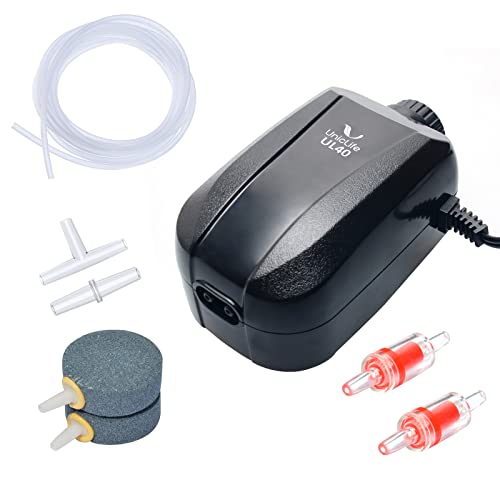
The Uniclife air pump offers 64 GPH output with a compact, quiet operation suitable for 10–100 gallon tanks. It includes dual outlets and a rotary flow control to tailor aeration. With its stated dB levels, it is appropriate for bedrooms or living spaces where minimal noise is preferred. A check valve and tubing accessories are compatible with typical aquarium setups.
Key considerations:
– Noise management: Quiet operation is important for nighttime viewing and tank stability.
– Outlet flexibility: Dual outlets support multi-zone aeration or plant roots.
– Maintenance: Regular tube and stone replacements help sustain oxygenation efficiency.
PULACO 95GPH Mini Submersible Pump
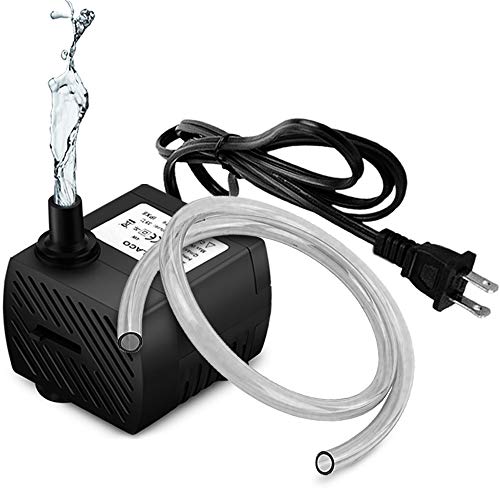
The PULACO mini submersible pump provides up to 95 GPH with a 3.3 ft tubing height, designed for small aquariums, ponds, and hydroponics. It is easy to detach and clean and offers an adjustable flow rate via a knob. Its compact size makes it suitable for tabletop fountains or desktop aquariums where space is at a premium.
Key considerations:
– Tiny footprint: Ideal for small setups; losses in flow may be noticeable in larger systems.
– Maintenance: Detachable design simplifies cleaning and reduces clog risk.
– Cable routing: Ensure proper cord management to prevent accidental unplugging or tripping hazards.
Buying Guide: Key Purchase Considerations and Comparisons
-
<liFlow rate and tank size: For small tanks (10–20 gallons) a pump in the 50–150 GPH range suffices; for larger tanks (40–100 gallons) aim higher, around 200–550 GPH or more, depending on filtration and waterfall features.
- Lift height: Taller tanks require pumps with greater lift. A pump’s flow rating often decreases as lift increases. Match the height of your water column to the pump’s capabilities.
- Submersible vs. external: Submersible pumps save space and are easy to hide, but external pumps can be easier to service and may run cooler in some setups. Consider maintenance access when choosing.
- Noise and vibration: Quiet operation is ideal for living spaces. Look for rubber feet, vibration dampening, and sealed housings to minimize noise.
- Maintenance and cleaning: Detachable designs that allow tool-free disassembly simplify regular cleaning, reducing the risk of clogs and failing performance.
- Air pumps vs. water pumps: Air pumps aerate water, which is critical for oxygenation, especially in higher bioload tanks or ponds. Water pumps circulate water and help with filtration and skimming. Many setups benefit from a combination of both.
- Power considerations: Use GFCI outlets for outdoor or wet installations. Check voltage compatibility with regional electrical standards to ensure safety and efficiency.
- Durability and materials: Copper motors and robust housings tend to last longer in demanding environments. Look for pumps with corrosion-resistant components if used in saltwater or high-mineral water.
Selecting the right pump depends on your tank size, water features, and noise tolerance. The options highlighted cover a range of needs—from compact, quiet aeration to higher-flow submersible pumps for ponds and hydroponics—allowing you to design a balanced, healthy aquatic environment.