Best Fence Systems for Dogs: Top Safe and Reliable Solutions
Protecting your dog and keeping them safe outdoors starts with choosing the right containment solution. This guide highlights five trusted fence systems designed for different yards, dog temperaments, and training needs. From wireless to GPS-based systems, these options offer varying boundary styles, collar features, and ease of installation to help you find the best fit for your furry friend.
Quick overview of the selected products:
| Product | Boundary Type | Zone Size | Best For |
|---|---|---|---|
| PetSafe Wireless Pet Containment System | Wireless | Up to 1/2 acre | Small to medium yards, travel-friendly |
| PetSafe Stay & Play Wireless Fence | Wireless | Up to 3/4 acre | Stubborn dogs, larger yards |
| PetSafe 2-Dog Basic In-Ground Fence | In-Ground | Up to 1/3 acre | Two dogs, budget-friendly |
| Lilyeel GPS Wireless Dog Collar Fence System | GPS | Custom polygon (no wires) | Large or irregular properties, no digging |
| DJNFGQ GPS Wireless Dog Fence System | GPS | Guided by app/markings | Open spaces, flexible layouts |
PetSafe Wireless Pet Containment System

The PetSafe Wireless Pet Containment System provides a lightweight, travel-friendly solution that can be set up in 1-2 hours. It creates a circular boundary that covers up to a 1/2 acre, offering the convenience of no digging and quick relocation. The system includes 5 adjustable correction levels, a tone-only training mode, and a reentry feature designed to reduce static corrections as your dog returns to the boundary. The waterproof receiver collar uses a replaceable battery with a lifespan of up to two months and accommodates dogs over 6 months old weighing at least 8 pounds. Neck sizes range from 6 to 28 inches, ensuring a comfortable fit for many breeds.
Key considerations: Wireless fences are ideal for smaller to mid-sized yards and renters who may need portability. They require a relatively clear space for optimal signal and can be affected by metal objects or certain environments. Training time varies by dog, but the system’s tone option and multiple correction levels support gradual positive reinforcement. Durability and battery life are worth noting for owners who require hands-off maintenance.
PRTRFLC GPS Wireless Dog Fence System

This GPS-based system emphasizes precise positioning through advanced AI GPS technology, offering ultra-accurate boundary awareness and strong anti-interference performance. It supports an expansive boundary with a radius up to 6,561 feet (roughly 2 miles) and allows for a configurable range. A clear caveat notes this setup is best for open fields, farms, or large outdoor spaces rather than densely treed or housing-dense areas. The system includes three training modes—Beep, Vibration, and Shock—with a protection feature to prevent over-correction. A memory function preserves boundary settings after power loss.
Important considerations: GPS fences eliminate the need for buried wires and are well-suited to large or irregular properties. They depend on satellite signals, so GPS reliability can be influenced by weather or dense cover. Training should be monitored to ensure humane use of corrections and to establish consistent boundary cues for your dog. Battery life, waterproofing, and collar comfort are additional factors to evaluate for long-term use.
PetSafe Stay & Play Wireless Fence

The Stay & Play model from PetSafe targets households needing a robust wireless setup for up to 3/4 of an acre. It emphasizes a circular boundary and user-friendly operation, with 5 adjustable correction levels, a tone-only training mode, and static-free reentry to help dogs learn the boundary more smoothly. The waterproof, rechargeable receiver collar is suitable for dogs over 6 months old weighing at least 5 pounds, with neck sizes adjustable from 6 to 28 inches. This option is particularly appealing for dogs that are hesitant or stubborn, offering steady reinforcement and convenience for pet owners who value a travel-ready system.
Choosing this option makes sense for owners seeking a larger wireless containment area without digging, plus the flexibility of reconfiguring the boundary as needed. To maximize success, pair the device with consistent training sessions and ensure the collar fits securely but comfortably. Consider backup power if you travel with pets or use the system in temporary outdoor spaces.
PetSafe 2-Dog Basic In-Ground Fence System
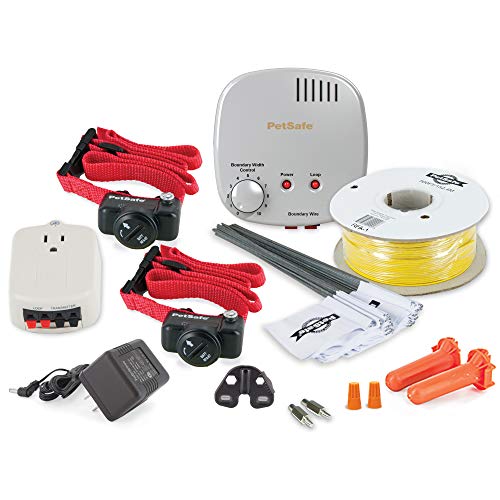
The 2-Dog Basic In-Ground Fence System provides an affordable, DIY-friendly solution that uses buried wire to define the boundary. It covers up to 1/3 acre with the included wire and comes with an indoor transmitter and boundary flags to visualize the perimeter. The Deluxe UltraLight Receiver Collar offers a tone-only mode and four levels of static correction that can be tuned to a dog’s temperament. The waterproof, battery-operated collar fits dogs over 6 months old and supports neck sizes from 6 to 26 inches. This system is well-suited for multi-pet households looking to expand gradually.
Pros and caveats: In-ground systems can be more permanent and less obtrusive in the yard, but require careful installation and testing. The potential for boundary confusion exists if the wires are damaged or the landscape changes. Regular checks of the wire integrity and collar fit help maintain reliable performance. For households planning future expansions, this setup allows scalable growth from one to multiple dogs.
PetSafe Stubborn Dog In-Ground Fence

The Stubborn Dog In-Ground Fence is designed for more challenging dogs and features a 2-person weekend DIY installation. It supports a boundary up to 1/3 acre and uses a waterproof, adjustable collar with tone and vibration modes, plus four levels of safe static correction. The neck size range from 6 to 28 inches makes it adaptable for many dog sizes. The system’s design targets dogs that are inclined to test or push boundaries, offering more nuanced training cues to reduce escapes or boundary breaches.
Key takeaway: In-ground systems like this one provide precise, project-driven containment with hands-on setup. When using with stubborn dogs, pair the collar with consistent training signals and gradually adjust the correction levels to find the right balance between safety and comfort. Regular boundary checks help maintain accuracy over time.
DJNFGQ GPS Wireless Fence System

This GPS-based system emphasizes satellite-driven boundary enforcement and does not require buried wires. It offers a flexible boundary approach with GPS-based containment, relying on app-configured zones and remote training options. The system highlights an IPX7 waterproof, rechargeable collar designed for durability in outdoor conditions, suitable for various dog sizes. The GPS design enables quick boundary adjustments without trenching, making it ideal for expansive yards, parks, or farms where wiring isn’t feasible.
Considerations: GPS fences deliver strong convenience for large or irregular properties but can be susceptible to signal quality in heavily wooded areas or urban canyons. Training should leverage the app’s alerts and the remote training option to help dogs learn boundary cues without over-correction. As with all GPS systems, battery management and collar fit are critical for consistent performance.
Buying Guide: Key Purchase Considerations
When selecting a fence system for dogs, consider the following dimensions to match your needs:
- Boundary Type: Wireless, in-ground, or GPS. Wireless is easy to install; in-ground offers precise custom shapes; GPS handles large or irregular spaces without wiring.
- Area Coverage: Assess your yard size and potential future expansion. Wireless models differ in maximum effective area; GPS setups scale with property size.
- Dog Size And Temperament: Ensure the collar weight, neck range, and correction levels fit your dog’s age and sensitivity. Some dogs respond better to tone or vibration before static corrections.
- Training Approach: Look for systems that provide multiple training modes, beeps, vibrations, and adjustable correction levels to support positive reinforcement.
- Weather and Durability: Waterproof collars and IP-rated devices help withstand outdoor elements. Battery life is important for portability and maintenance.
- Maintenance And Installation: In-ground systems require wiring and testing; wireless systems are easier to relocate for travel or changing yards. GPS systems depend on reliable satellite signals and may have ongoing app requirements.
- Safety Features: Protection modes, reentry controls, and escalation protocols reduce stress for dogs while preventing over-correction.
These factors guide a balanced decision between ease of use, boundary precision, and long-term dog welfare. Evaluate your yard layout, your dog’s behavior, and how much time you want to invest in setup and maintenance. For multi-dog households, consider systems that support multiple collars and scalable boundary options without compromising safety.