Best Dog Training High-Frequency Sound Devices for Bark Control
Finding humane and effective tools for dog training can improve indoor peace and outdoor safety alike. High-frequency ultrasonic devices offer a non-contact way to discourage barking and unwanted behaviors while supporting positive learning. This article highlights five top options, explains how they work, and compares their features to help American dog owners choose the right training aid for home or travel use.
Summary of Selected Products
| Product | Brand | Key Benefit |
|---|---|---|
| PawBehave Adjustable Ultrasonic Dog Trainer | PawBehave | 10 frequency levels, 18 whistles, dual-mode flashlight |
| PetSafe Collarless Trainer | PetSafe | No collar, multiple modes, rechargeable |
| Cbersmg Dog Bark Deterrent Device | Cbersmg | 5 modes, up to 50 ft range, dual-sensor option |
| SAMULE Ultrasonic Bark Deterrent | SAMULE | 5 modes, USB-C rechargeable, indoor/outdoor |
| iBurr Dog Bark Deterrent Devices | iBurr | 6 modes, 33 ft range, flashlight |
The following sections present five carefully chosen products, each with a concise overview and training-focused details. All information reflects listed features and typical usage considerations for home and travel settings.
PawBehave Adjustable Ultrasonic Trainer

This model introduces the world’s first adjustable ultrasonic trainer with 10 customizable frequency levels (20KHz–30KHz) to suit different breeds and behaviors. It includes 18 built-in dog whistle sounds to reinforce recall and focus, and a dual-mode high-lumen flashlight (1000 lumens) to aid nighttime training and visual cues. The combination supports humane behavior correction across indoor and outdoor environments, with emphasis on non-painful feedback that helps dogs learn appropriate responses.
Training considerations: The adjustable frequency enables tailoring to your dog’s sensitivity, which can reduce over-correction. The 18 whistle tones offer diverse cues, though consistency and positive reinforcement remain essential. Use the flashlight modes to aid attention during dusk or dusk-dawn training sessions. For best results, pair the device with short, positive training intervals and reward-based cues.
PetSafe Collarless Trainer
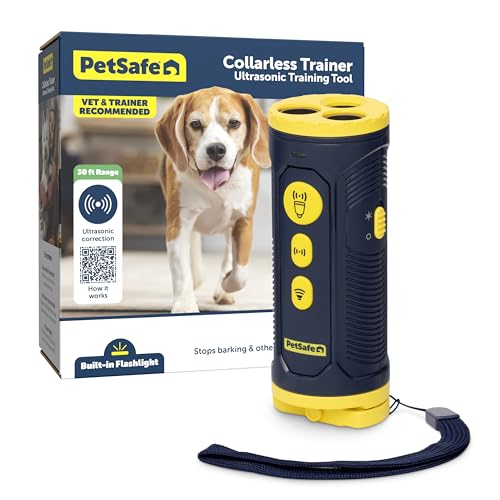
The PetSafe Collarless Trainer is a handheld ultrasonic bark deterrent that requires no collar. It offers multiple training modes, including tone, ultrasonic, combined ultrasonic with flashing light, and a flashlight-only mode. The device is rechargeable, compact for travel, and includes a wrist strap. It is designed for versatile daily use, compatible with various training environments to reduce nuisance barking without physical intervention.
Training considerations: For effectiveness, use consistent cues and short training bursts. The 4-in-1 modes let you adapt to your dog’s temperament and situational needs. Rechargeability eliminates ongoing battery costs, and portability supports on-the-go training during walks or outdoor visits. Monitor your dog’s stress signals and discontinue use if signs of distress appear.
Cbersmg Three-Emitter Bark Deterrent

Designed with triple ultrasonic emitters, this device aims for rapid, humane correction of barking, chewing, or jumping. It offers five modes, including ultrasonic sound, beeps, and a strobe light, enabling a tailored training approach for different dogs. It boasts up to 50 feet of range and a pocket-friendly size for outdoor use. The manufacturer notes that results vary by dog and that short training sessions with direct aim yield best results.
Training considerations: The alternating 25kHz fixed and 22–29kHz variable frequencies help prevent habituation. Use the device with a clear line of sight to the dog and avoid prolonged exposure. Combine with positive reinforcement and avoid using with dogs that have known neurological conditions, as with any training tool.
SAMULE Ultrasonic Bark Deterrent

The SAMULE device offers five training modes and a USB-C rechargeable design, suitable for indoor and outdoor use. Its compact form and 10kHz–30kHz operational range aim to deter neighbor dogs from barking without discomfort. This model emphasizes portability and ease of use while providing an effective supplemental tool to curb nuisance barking during daily activities and travels.
Training considerations: Regular short sessions are recommended, with attention to the dog’s response to each mode. The USB-C recharge adds convenience for frequent users. Pair with consistent cues and positive reinforcement to maximize learning and minimize stress for the dog.
iBurr Dog Bark Deterrent Devices

The iBurr model provides six modes, including four ultrasonic settings and an audible beep, for adjustable training in both indoor and outdoor settings. A remote capability helps manage barking from up to 33 feet away, with an integrated LED flashlight for nighttime use. The device positions itself as a flexible option for quieter environments and easier situational control.
Training considerations: Use the most appropriate mode for the dog’s temperament and the environment. The remote control feature supports distance-based guidance, but maintain humane, non-punitive training. Monitor dog comfort and discontinue use if signs of stress occur.
Buying Guide: Key Purchase Considerations
When selecting a high-frequency sound deterrent, consider breed sensitivity, dog age, and activity level. The options below summarize practical considerations and how they might affect effectiveness and safety:
- Frequency range and customization: Devices offering multiple frequencies allow tailoring to different dogs. Look for models with adjustable frequency or a wide range to minimize habituation.
- Range and coverage: Indoor use may require shorter ranges, while outdoor or yard training benefits from longer reach. Assess your typical training spaces and the device’s stated range.
- Modes and feedback: A mix of ultrasonic signals, beeps, flashing lights, and voice cues can support learning. Start with gentle cues and progress gradually.
- Power and portability: Rechargeable units simplify usage across home, car trips, and travel. Note charging times and battery life for extended sessions.
- Safety and dog welfare: Avoid devices that cause pain or distress. Look for auto-off features and recommended usage guidelines to prevent overexposure.
- Dog-specific considerations: Some devices are not suitable for dogs with certain health conditions. Consult a veterinarian if there are concerns about hearing sensitivity or neurological disorders.
- Training integration: Use the device as a training aid alongside reinforcement strategies. Treats, praise, and consistent routines improve outcomes more than devices alone.
Across the evaluated options, most devices emphasize humane training and non-aversive cues. The best choice depends on your dog’s temperament, the training environment, and how much control you need during sessions. Always start with the lowest intensity and shortest duration, and monitor for stress or discomfort. If bark issues persist or worsen, consult a professional trainer for a tailored plan.