Best Puppy Poodle Diets: Top Food Options for Poodle Puppies
Poodle puppies have specific nutritional needs to support rapid growth, strong bones, and a healthy coat. This guide highlights five top-rated options that are well-suited for purebred Poodles in their puppy stage, as well as comparable choices for small breeds. Each product listing includes key benefits, and a buying guide helps you pick the right formula based on breed size, life stage, and health considerations.
Summary Table of Selected Products
| Product | Brand | Life Stage | Key Benefit |
|---|---|---|---|
| Royal Canin Breed Health Nutrition Poodle Puppy Dry Dog Food, 2.5 lb Bag | ROYAL CANIN | Puppy | Designed for purebred Poodles; specialized kibble for easy pickup |
| Royal Canin Size Health Nutrition Small Puppy Dry Dog Food, 4 lb Bag | ROYAL CANIN | Puppy (Small Breed) | Supports brain development and growth in small breeds |
| Hill’s Science Diet Puppy Small & Mini Breeds Dry Dog Food, Chicken & Brown Rice, 4.5 lb. | Hill’s Science Diet | Puppy | DHA for brain development; balanced minerals for bones |
| Blue Buffalo Life Protection Formula Puppy Dry Dog Food with DHA and ARA, 5-lb Bag | Blue Buffalo | Puppy | Real chicken first; no corn, wheat or soy; supports cognitive function |
| Pedigree Dry Puppy Food, Grilled Steak & Vegetable Flavor, 3.5 lb | Pedigree | Puppy | High-quality protein with fortified vitamins and minerals |
Royal Canin Breed Health Nutrition Poodle Puppy Dry Dog Food, 2.5 lb Bag
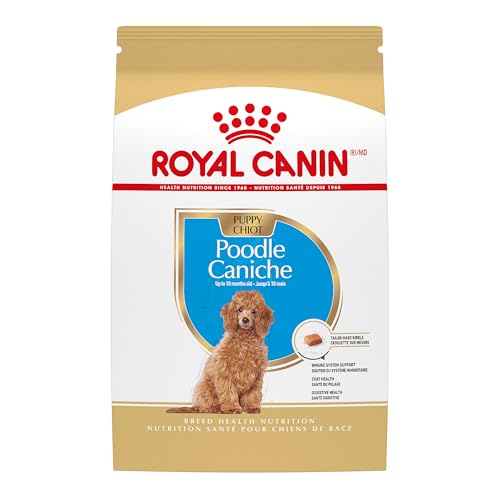
Royal Canin tailors this dry food for purebred Poodles aged 8 weeks to 10 months. The kibble is specially shaped to accommodate a Poodle’s muzzle and chewing style, aiding portion control and ease of picking up the morsels. An antioxidant complex, including vitamin E, supports the immune system during early development, helping puppies ride the growth curve with resilience. This formula emphasizes breed-specific needs, making it a strong choice for breeders and owners seeking a targeted puppy diet for Poodles.
Royal Canin Size Health Nutrition Small Puppy Dry Dog Food, 4 lb Bag

Although marketed for small-breed puppies, this formula benefits many dogs during early growth stages. It supports brain development and energy needs with a balanced blend of nutrients, tailored to the faster growth rates of small dogs. The crunchy kibble is convenient to serve and pairs well with complementary wet foods. If you anticipate a smaller adult Poodle, this option aligns with their eventual needs while still serving puppies effectively.
Hill’s Science Diet Puppy Small & Mini Breeds Dry Dog Food, Chicken & Brown Rice, 4.5 lb. Bag

Hill’s Science Diet uses DHA from fish oil to support healthy brain and eye development—an important consideration for highly energetic Poodle puppies. The formula includes high-quality protein to support growing muscles and active play, along with balanced minerals to aid bone and teeth development. This option is well-regarded for veterinary backing and research-driven nutrition, making it a reliable choice for puppies under growth pressure.
Blue Buffalo Life Protection Formula Puppy Dry Dog Food with DHA and ARA, 5-lb Bag

Blue Buffalo’s Life Protection Formula Puppy uses real chicken as the first ingredient and avoids chicken by-products, corn, wheat, and soy. It includes DHA and ARA to support cognitive and retinal development, aligning with the needs of growing puppies. The formula emphasizes natural ingredients and minimal processing, appealing to owners seeking a more natural profile for their Poodle puppy’s first year.
Pedigree Dry Puppy Food, Grilled Steak & Vegetable Flavor, 3.5 lb

Pedigree’s puppy formula provides high-quality protein to support muscle development and is fortified with 36 vitamins, minerals, and amino acids to promote overall health and vitality. This option offers good value for owners seeking a dependable daily diet for growing Poodle puppies, with a focus on immune support and energy for play and exploration.
Buying Guide: Key Purchase Considerations
- Life stage and breed size: Poodle puppies have compact frames with specific growth trajectories. For purebred Poodles in early life, formulas like breed-specific or small-breed puppy foods can better align with muzzle shape, chewing styles, and energy requirements.
- Nutrient balance: Look for high-quality protein as the primary ingredient, plus DHA for brain development, and appropriate calcium-phosphorus ratios for bone growth. Omega-3 fatty acids support skin and coat health, which is often a priority for Poodles.
- Kibble design: For toy and small breeds, kibble shape and texture can affect chew ease and portion control. Some breed-targeted formulas feature kibble designed for better pickup and jaw alignment.
- Allergen considerations: If your Poodle puppy has sensitivities, choose options with limited common allergens and no artificial additives. Blue Buffalo and Hill’s lines often emphasize natural ingredients and controlled formulas.
- Wet versus dry balance: Combining dry kibble with wet food can improve palatability and hydration. Consider a dual approach if your puppy is a picky eater or needs extra moisture in meals.
- Veterinary guidance: For puppies with specific health concerns (skin, coat, digestion, or weight management), consult a veterinarian to select a formula aligned with health goals and breed tendencies.
- Transitioning foods: When changing diets, mix the new formula with the current one for 7–10 days to minimize stomach upset and ensure a smooth transition.
Choosing the right food for a Poodle puppy involves evaluating growth needs, coat health, and bite mechanics. The options above provide breed-relevant and general puppy nutrition that can support healthy development, coat quality, and energy levels as your Poodle grows toward adulthood. Always monitor your puppy’s weight, appetite, and stool consistency, and adjust portions accordingly in consultation with a veterinary professional.