Best Cat Litter Box to Toilet Training Kits for Easy Training
Choosing a litter box that doubles as a toilet-training aid can streamline pet care and keep your bathroom tidy. This guide highlights five top options that blend open designs, safety features, and smart controls to support cats in transitioning to toilet use or simply delivering hands-free cleaning. Each product is evaluated for size range, cleaning mechanism, noise level, and compatibility with various toilet setups.
| Product | Brand | Key Benefit |
|---|---|---|
| Cat Toilet Trainer Kit | iigala | Five detachable levels for staged training |
| Automatic Self-Cleaning Box | Mintakawa | App control and weight monitoring |
| Semi-Automatic Quick Cleaning | SportPet Designs | Drawer-style cleaning, large entry |
| Automatic Self-Cleaning Box | FRCFRC | Whisper-quiet with app support |
| Cat Toilet Training Kit | IFASHIHOME | Removable design with feather toy |
Cat Toilet Trainer Kit By Iigala
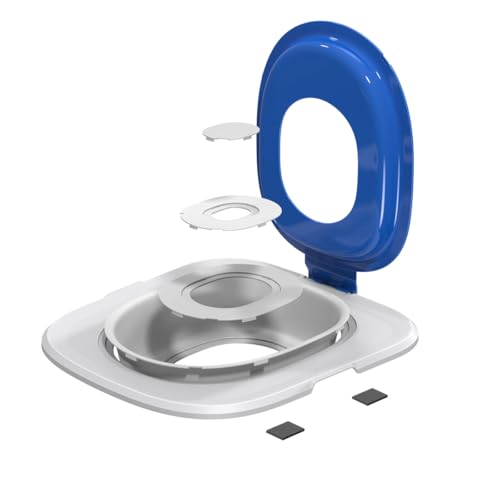
The Cat Toilet Trainer Kit from Iigala features a 2025 upgrade with five detachable components. This adjustable system uses level-by-level removal during the adaptation period, helping cats learn toilet usage progressively. A double-layer design adds practicality: the upper lid facilitates litter filling and cleaning, while the lid closure stabilizes a standing cat during use. Compatibility covers most toilet sizes, including squatting pans, offering multi-functional use for varied households.
Mintakawa Automatic Self-Cleaning Litter Box

Mintakawa’s automatic litter box emphasizes quiet operation and remote monitoring. Designed for small to medium cats (3.5 to 15 lb), it operates at low noise levels (below 35 dB) to minimize disturbance. The product offers app connectivity via 2.4 GHz Wi-Fi or Bluetooth, delivering real-time data on cat weight, visit duration, and frequency. This model suits homes seeking smart tracking and minimal maintenance while accommodating multiple cats within a safe, quiet environment.
Le You Pet Semi-Automatic Cleaning Box
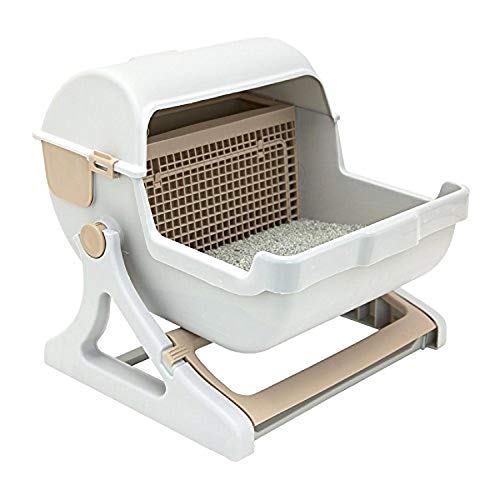
The Le You Pet semi-automatic model combines a litter separation grid with a drawer-style cleaning design to streamline maintenance. Sized at roughly 19.68 by 19.68 by 18.1 inches, its footprint accommodates up to an 18-pound adult cat. The product uses an environmentally friendly resin PP material that remains non-toxic, moisture-resistant, and durable against chemicals. The design aims to simplify waste management while delivering a straightforward transition between manual and assisted cleaning.
FRCFRC Automatic Self-Cleaning Litter Box

FRCFRC’s model emphasizes app control and safety features suitable for multi-cat households. It is designed for cats from 3.3 to 20 lb and operates at whisper-quiet levels under 35 dB. The companion app supports 2.4 GHz Wi-Fi and Bluetooth, allowing owners to monitor weight, toilet duration, and litter visits in real time. This option places emphasis on seamless remote management and reliable performance with multiple cats in mind.
IFASHIHOME Cat Toilet Training Kit

The IFASHIHOME toilet training system is a reusable plastic trainer with one replaceable cat feather toy included. Made from environmentally friendly ABS, the kit emphasizes safety, non-toxicity, and ease of disassembly for setup and cleaning. It’s designed to help train cats to use a toilet, offering a cost-saving approach with a focus on long-term usability and simple maintenance for households seeking an affordable entry into toilet training without sophisticated electronics.
Buying Guide
Key considerations when selecting a cat toilet-related litter system include design approach, training level, and household needs. Open-top and semi-automatic designs are best for easing transitions, while fully automated options suit busy households seeking hands-free cleaning. Size compatibility matters, particularly for larger cats or multi-cat homes. Noise levels are important to reduce stress, with most modern units operating under 40 dB. App and sensor features provide data on cat behavior and litter usage, offering insights for adjusting training plans. Material safety, ease of cleaning, and availability of replacement parts should factor into the long-term value. Finally, assess whether you prefer a simple training kit or a connected system with weight sensing and remote monitoring for ongoing health tracking.
- Training intensity: Begin with removable components and gradual steps, especially for new trainees.
- Safety features: Look for anti-pinch protections and sensor-based pausing for cat safety.
- Maintenance: Choose designs with easy disassembly and straightforward cleaning routines.
- Connectivity: App-controlled models provide ongoing insights but require stable Wi-Fi.
- Cost of ownership: Consider long-term costs like disposable liners or bags and replacement parts.