Best Cat Cages for Shelter: Safe, Durable Enclosures for Feline Care
When shelters need reliable cat cages, choosing options that combine safety, easy cleaning, and versatile layouts is essential. The following selections emphasize sturdy construction, multiple access points, and practical features like detachable trays, litter box integration, and adaptable sizes. Each option supports 1–2 cats or small groups, and many include portability or outdoor-use design. This guide highlights five top picks with clear benefits for shelter environments, helping staff manage daily care, feeding, cleaning, and enrichment efficiently.
Summary Of Chosen Products
| Product | Brand | Key Benefit | Approximate Size |
|---|---|---|---|
| VISCOO Cat Cage, 3-Tier DIY Catio | VISCOO | Three doors, ramped platforms, indoor/outdoor use | 24″ L x 16″ W x 36″ H |
| Amazon Basics Large 3-Tier Cat Cage Playpen | Amazon Basics | Durable steel, easy transport, removable tray | 35.8″ x 22.4″ x 50.6″ |
| Oneluck 3-Tier Cat Cages Indoor Enclosure | Oneluck | Spacious, 2 doors and top skylight for cleaning | 35.4″ x 31.5″ x 35.4″ |
| Oneluck Large Cage With Litter Box | Oneluck | Integrated litter box with drawer design | 41.3″ L x 17.8″ W x 55.1″ H |
| TeqHome 3-Tier Cat Cage | TeqHome | Durable iron, DIY layouts, 3-tier design | 28.2″ x 14.0″ x 42.1″ |
VISCOO Cat Cage: 3-Tier Indoor/Outdoor Catio
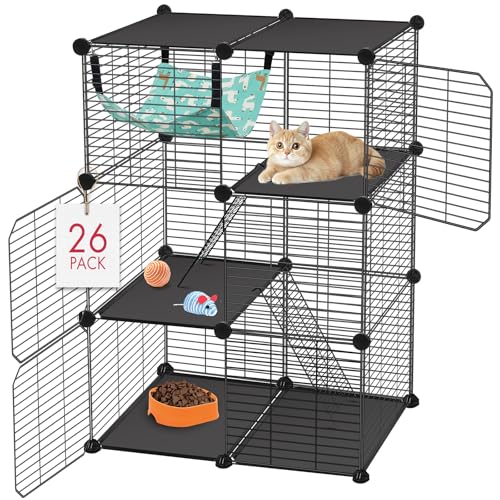
VISCOO offers a three-tier playpen designed for kittens and small cats, with a footprint suitable for apartments or sheltered outdoor spaces. The multiple doors allow convenient feeding, cleaning, and social interaction, while the included hammock creates a cozy resting area. The structure supports indoor-outdoor use, enabling shelter programs to rotate cats through sheltered courtyards or indoor rooms. A modular design helps staff reconfigure compartments as cat populations change. For safety, verify the size before placement to ensure cats fit comfortably and can move safely between levels.
Amazon Basics Large 3-Tier Cat Cage Playpen

This option emphasizes durability with rust-resistant steel wire and secure-locking doors. A 1.36-inch bar spacing enhances safety, while four locking wheels enable easy relocation within a shelter. The removable tray supports quick cleaning and waste management, and the unit folds flat for storage when not in use. Shelters can stagger cages to adapt to intake flow or medical isolation needs, making this a versatile core cage for daily housing, quarantine, or behavioral enrichment programs.
Oneluck 3-Tier Catio Enclosure

Oneluck’s 3-tier design provides ample space for a single cat or small grouping, with two entry doors and a skylight for cleaning and social interaction. The cage uses a sturdy black-coated wire and includes ZIP-TIES to reinforce stability. Dimensions offer a balanced footprint for shelter rooms with limited floor space. This cage supports feeding, play, and rest zones while maintaining clear separation between animals as needed, a key feature for intake or medical observation periods.
Oneluck Large Cage With Litter Box

This unit integrates a partitioned litter area with a practical drawer-style cleaning feature. The design minimizes litter spread within the enclosure, simplifying daily housekeeping. A spacious enclosure helps keep a cat comfortable during recovery or quarantine while allowing caretakers to maintain hygiene easily. The two-door access and broad interior enable easy feeding and enrichment setups, making it a strong choice for shelter programs prioritizing sanitation and welfare.
Indoor Cat Cage With Litter Box And Bed

This enclosure emphasizes a homey approach with a built-in bed, integrated litter box, and a cleanable interior. A warm, premium feel aims to reduce stress for shelter cats transitioning to new environments. The independent litter zone and dedicated cleaning space help volunteers and staff manage daily routines, while the overall layout supports quiet rest areas alongside play zones. Use in induction rooms or adoption centers to maintain a calm, hygienic habitat for incoming felines.
Buying Guide: Key Purchase Considerations
- Size and space: Match the enclosure dimensions to the available shelter floor area and the typical cat size. Some units are better for 1–2 cats, while others can accommodate small groups with careful management.
- Access and cleaning: Look for multiple doors, easy-to-remove trays, and drawer-style litter boxes that minimize disruption during cleaning and feeding.
- Durability and safety: Choose rust-resistant steel or coated wire, smooth edges, and secure latching to prevent injuries or escapes. Consider options with stability aids like ZIP-TIES or cross-bracing for busy shelters.
- Mobility and storage: Foldable designs and wheeled cages make it easier to reconfigure spaces, transport between rooms, or store during off-hours.
- Indoor vs. outdoor use: If shelter spaces include outdoor runs, select cages rated for outdoor conditions and easy weatherproofing; ensure shade and ventilation.
- Hygiene features: Integrated litter boxes or easy-clean trays reduce cleaning time and litter spill, promoting a healthier environment for animals and staff.
- Animal welfare: Prioritize cages that provide resting zones, vertical space, ramps or ladders, and safe materials that do not irritate paws or tails.
- Maintenance considerations: Accessibility for routine tasks, availability of spare parts, and modularity for different cat personalities or medical needs.
In shelter settings, selecting cages that offer adaptability, easy sanitation, and safe interaction helps caregivers manage daily tasks while supporting cat welfare. The products above provide a range of layouts—from compact 3-tier enclosures to larger cages with integrated litter areas—allowing shelters to scale housing to intake flow and medical or behavioral needs. When choosing, test layout options in the available space, and consider staff training for efficient cleaning and socialization routines.