Best Cat Bowls That Help With Vomiting and Improve Digestion
If your cat vomits after meals, the right bowl can make a meaningful difference. The following hand-picked cat bowls emphasize slow feeding, elevated designs, and ergonomic shapes to reduce vomiting, support better digestion, and promote healthier eating habits. Each option below is designed for use with dry or wet foods and is easy to clean.
Summary of Selected Products:
| Product | Brand | Key Benefit | Notes |
|---|---|---|---|
| 2Pcs Silicone Slow Feeder Cat Bowl | Sarnxgr | Slow feeding, prevents gulping | Floral vortex design, microwave/refrigerator safe |
| Upgraded Elevated Cat Bowls with Food Mat | Summark | 15° tilt to reduce neck stress | Includes silicone mat for mess-free feeding |
| vancasso Ceramic Slow Feeder Cat Bowl | vancasso | Raised design to slow eating | Non-slip base, suitable for dry and wet foods |
| Bifeaw Slow Feeder Cat Bowl | Bifeaw | Spiral channels slow feeding | Silicone, BPA-free, microwave safe |
| Kitty City Elevated Cat Bowls (Set of 2) | Kitty City | Whisker-friendly, improved posture | Dishwasher safe, 6.5 oz capacity |
2Pcs Silicone Slow Feeder Cat Bowl
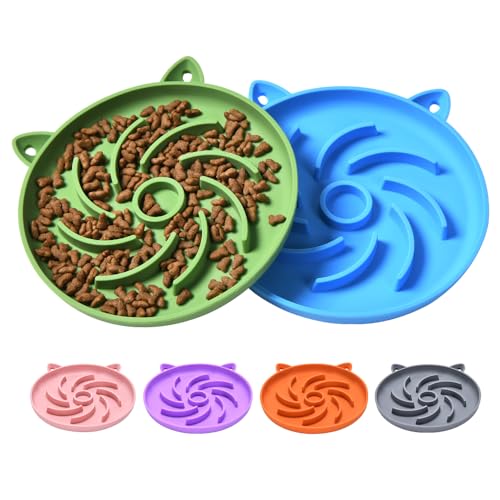
The Sarnxgr slow feeding bowls are made from third-generation upgraded food-grade silicone, offering thickness and durability beyond standard silicone. They are safe for all dry and wet foods and designed to protect a cat’s nose during eating. The bowls feature a floral vortex design that encourages longer eating times, which can aid digestion and reduce vomiting risk. The bright color options appeal to cats, and the bottom includes an anti-slip base for stability. They are microwave and refrigerator safe for easy meal prep and storage.
Upgraded Elevated Cat Bowls With Food Mat
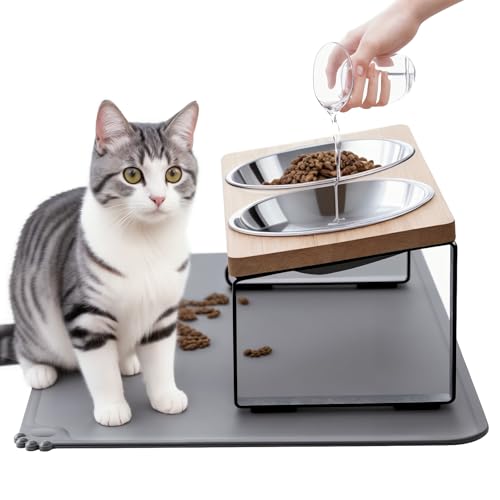
These elevated cat bowls reduce neck and stomach strain with a 15-degree tilt and a shallow 1.2-inch bowl shape to minimize whisker fatigue. The included silicone mat prevents food spills and protects floors, making it easier to maintain a clean feeding area. The design is tailored to kittens and small cats, supporting easier swallowing and digestion during meals. The dual-bowl setup also helps separate water from food while the height reduces pressure on the digestive tract during eating.
vancasso Ceramic Slow Feeder Cat Bowl

This ceramic slow feeder features a raised interior with a fish-shaped inner design to encourage slower, healthier eating. The elevated stature promotes better posture and digestion, while the wide base and non-slip bottom keep the bowl stable during enthusiastic meals. It’s suitable for both dry and wet foods and helps reduce the risk of choking and indigestion linked to rapid eating.
Bifeaw Slow Feeder Cat Bowl

The Bifeaw slow feeder uses a spiral channel design to force cats to navigate around curves to reach their meal, naturally slowing eating and aiding digestion. Made from high-quality silicone, it is BPA-free, odor-free, and safe for reuse with both dry and wet foods. It is microwave and refrigerator safe, and the non-slip base minimizes spills, especially on mats or hard floors.
Kitty City Elevated Cat Bowls (Set of 2)

This set includes two elevated bowls designed to promote healthy eating posture and reduce neck strain. The whisker-friendly oval bowls minimize whisker fatigue while the slanted front design makes it easier for cats to access their food. The bowls are dishwasher safe for convenient cleaning, and each holds about 6.5 oz of food or water, making them suitable for daily use with cats and kittens alike.
Buying Guide
- Slow feeding vs. elevation: If vomiting is primarily due to fast eating, prioritize slow-feeder designs. If neck and digestion are concerns, look for elevated or tilted bowls to promote better posture and digestion.
- Material safety: Choose BPA-free silicone or ceramic with smooth interiors. Food-grade materials reduce the risk of allergic reactions or odors transferring to food.
- Stability and slip-resistance: A strong anti-slip base or mat helps prevent spills and reduces the chance of the bowl tipping during a meal.
- Ease of cleaning: Dishwasher-safe or easy-hand-wash surfaces minimize maintenance and help keep feeding areas hygienic.
- Size and capacity: For kittens or small breeds, compact bowls with 6–8 oz capacity work well; for larger cats, consider bowls with higher rims and larger volumes to prevent frequent refills during meals.
- Multi-bowl setups: If you feed both food and water separately, set up dual bowls or a raised dual-bowl system to minimize cross-contamination and promote steady meals.
- Compatibility with foods: Ensure the bowl design works with both dry and wet foods. Some designs may be easier to clean after wet food meals to prevent odor retention.
- Durability and longevity: Consider silicone for flexibility and resilience or ceramic for a stable, stain-resistant surface. Some cats may prefer one material over another based on texture and sound when drinking or eating.
- Maintenance routine: Regularly inspect for wear, especially silicone edges that may roughen over time. Replace if cracks or tears appear to avoid choking hazards.
- Owner preferences: Aesthetics and color can influence a cat’s willingness to dine; choose shapes and colors that are visually appealing to your pet and fit your home.