Best Bowls for Dogs That Eat Too Fast: Slow-Down Solutions for Healthier Mealtimes
Dogs that scarf their meals can suffer from bloating, choking, and digestive issues. Slow feeder bowls use maze-like designs to extend mealtimes and encourage mindful eating. This article highlights five proven options that fit medium to large breeds, offering durable construction, safe materials, and engaging designs to help dogs eat at a healthier pace. Read on to compare features, included accessories, and performance considerations to choose the right slow feeder for your pet.
Summary of Selected Products
| Product | Brand | Key Feature | Food Capacity |
|---|---|---|---|
| COMESOON Slow Feeder Dog Bowl | COMESOON | Maze design; fits COMESOON bowl stand | 1-2 cups |
| YINEYA Slow Feeder Dog Bowls | YINEYA | Unique maze; safe raised design | Varies with model |
| Neater Pet Brands Stainless Steel Slow Feed Bowl | Neater Pet Brands | Fits Neater Feeders; non-slip | 3 cups |
| Tuff Pupper Slow Feeder Insert Bowl | Tuff Pupper | Puzzle maze; dishwasher safe | 2 cups |
| AIPERRO Slow Feeder Dog Bowl Stainless Steel | AIPERRO | Non-slip base; 304 stainless steel | 2 cups |
The following sections summarize each option, outlining what makes them effective, material safety, and any practical considerations such as compatibility with existing feeders or ease of cleaning.
COMESOON Slow Feeder Dog Bowl

The COMESOON slow feeder is designed to reduce eating speed in medium to large dogs. Its inner diameter of 7.1 inches and outer diameter of 8 inches accommodate 1-2 cups of food, making it a practical option for many households. The maze layout spaces out kibble to extend mealtimes, supporting digestion and reducing overeating. This model is compatible with COMESOON bowl stands (DB-G03/DB-B03), streamlining setup for owners already invested in the COMESOON ecosystem. Cleaning is straightforward, and the design emphasizes safety and durability for daily use.
YINEYA Slow Feeder Dog Bowls

YINEYA’s slow feeder bowls emphasize a safe raised design and a unique maze layout intended to slow down eating without causing frustration. The bowls are made from high-quality PP material, which is non-toxic and recyclable, offering durability for regular use. The raised design minimizes skin irritation around the muzzle and ensures the tongue can reach all portions of food. This model is positioned as a versatile option for both medium and large dogs, with a focus on reducing digestive issues caused by rapid eating while maintaining a comfortable, chew-friendly experience.
Neater Pet Brands Stainless Steel Slow Feed Bowl
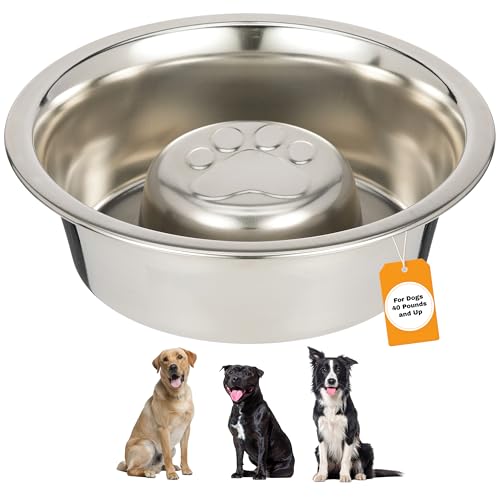
This stainless steel bowl is designed to fit inside select Neater Feeder models, including the Deluxe Large and Express options. With a 3-cup capacity, it slows fast eaters while remaining practical for larger meals. The product emphasizes compatibility with raised feeders, ensuring stability and a tidy feeding area. Its stainless steel construction offers long-term durability, ease of cleaning, and resistance to staining, making it a favorable choice for households that prioritize hygiene and compatibility with multi-area feeding stations.
Tuff Pupper Slow Feeder Insert Bowl (2 Cups)

The Tuff Pupper slow feeder insert offers a 2-cup capacity and a puzzle maze design that partitions food into smaller sections. Its wave-pattern layout challenges dogs to seek and retrieve food, encouraging slower, more deliberate eating. The design aims to support proper digestion and reduce overeating while remaining compatible with several elevated feeder trays. It’s marketed as dishwasher safe for easy maintenance and provides an engaging mealtime experience for dogs across various breeds.
AIPERRO Slow Feeder Dog Bowl Stainless Steel

The AIPERRO slow feeder combines a sleek stainless steel body with a non-slip base and a corrosion-resistant 304 stainless steel interior. The one-piece mold design simplifies cleaning while maintaining robust durability. This model is intentionally non-slip to prevent spills on hard floors and to help dogs maintain focus during meals. With two-cup capacity, it is well-suited for small to medium dogs and for households seeking a reliable, hygienic option that’s easy to maintain.
Buying Guide: Key Considerations For Slow Feeders
- Material safety and durability — Choose BPA-free, non-toxic plastics or stainless steel for long-term use. Stainless steel bowls are typically easier to clean and more durable than plastic alternatives.
- Size and compatibility — Consider your dog’s breed, typical meal size, and whether the bowl fits with your current raised feeder or stand. Some bowls are designed to work within specific brands, while others are universal.
- Maze design effectiveness — Look for shallow grooves and a layout that requires tongue movement and problem-solving without causing frustration. More intricate mazes slow eating further, but ensure accessibility for your dog’s chewing style.
- Non-slip features — Prevents sliding and tipping, protecting floors and reducing mealtime mess. Non-slip bases are especially important for active or large dogs.
- Maintenance and cleaning — Dishwasher-safe options save time. One-piece designs minimize crevices where food can accumulate. Consider how easy it is to wipe and sanitize after meals.
- Diet versatility — Most slow feeders work with dry, wet, or raw diets; confirm capacity aligns with your typical daily feeding quantity.
- Additional accessories — Some sets include placemats or puzzle elements to enhance mealtime novelty and adherence to a slow-eating routine.
- Safety considerations — Ensure there are no sharp edges and that the maze design doesn’t trap food in crevices where it can harbor bacteria.
When selecting a slow feeder, balance the dog’s temperament, appetite, and any digestive concerns with the product’s design and compatibility with your feeding setup. While some dogs adapt quickly to a maze-style bowl, others may require a gentler ramp-in design to ease into slower eating habits. Consider starting with a bowl that matches your dog’s current feeding volume and gradually increasing the complexity or switching to a larger maze if needed. Regular monitoring during the first weeks can help confirm the bowl effectively reduces eating speed without causing stress during meals.