Best Bark Deterrents for Dogs: Safe, Humane Training Devices
Bark deterrents for dogs offer a humane way to reduce excessive barking while supporting positive behavioral training. This article examines five popular options, outlining how they work, what to consider when choosing, and how to use them responsibly for effective, stress-free results. Each device uses ultrasonic sound, beeps, and optional flashes to communicate with your dog without physical harm. Below is a quick comparison to help you decide which model fits your home, yard, and training goals.
| Product | Brand |
|---|---|
| YUYQA Dog Bark Deterrent Device | YUYQA |
| SEDULAN Dog Bark Deterrent Devices | SEDULAN |
| Cbersmg Dog Bark Deterrent Device | Cbersmg |
| JTJTXL 1-Touch Dog Bark Deterrent | JTJTXL |
| Mzorts Dog Bark Deterrent Devices | Mzorts |
YUYQA Dog Bark Deterrent Device

YUYQA offers a 3X ultrasonic emitter design to extend barking control across outdoor spaces and indoor rooms. The device operates in six training modes, combining fixed 25kHz and variable 20-30kHz ultrasonic frequencies with an audible beep and LED flashlight. This multi-mode approach aims to adapt to a wide range of dog temperaments, providing humane correction without physical contact. A 23-foot range supports yard and porch use, while the flashlight aids nighttime training and safety. It is designed for dogs from six months to eight years old and should not be used with dogs having certain neurological disorders.
SEDULAN Dog Bark Deterrent Devices

SEDULAN combines a bark stopper, whistle, and clicker into one compact device. Ultrasonic waves help indicate undesirable behavior beyond barking, extending training to behaviors such as chewing or digging. The design emphasizes safe and humane training, avoiding pain or discomfort. With a 50-foot control range and built-in LED flashlight, the device supports indoor and outdoor use, including night walks. Training should emphasize short sessions and positive reinforcement, and it is suitable for many dogs while noting limitations with certain aggressive or stressed animals.
Cbersmg Dog Bark Deterrent Device

This model uses three ultrasonic emitters to deliver rapid, humane correction with a mix of fixed 25kHz and variable 22–29kHz frequencies. The device is designed for a broad age range (six months to eight years) and warns against use with dogs having neurological disorders. Five training modes, including light cues, accommodate different temperaments and training objectives. A 50-foot range supports yard-wide coverage, and the device is intended for indoor and outdoor use with short, controlled sessions for best results.
JTJTXL 1-Touch Dog Bark Deterrent

JTJTXL combines a three-head ultrasonic system with a one-touch operation for simplified training. The device doubles as a bark deterrent and a portable training tool, featuring a built-in flashlight for low-light use and a 50-foot effective range. The design emphasizes humane training, avoiding shocks and stress, while offering multiple modes (ultrasonic, sound, and flashlight-assisted cues) to address varying dog responses. This model is suitable for home and public spaces where neighbor dogs or persistent barkers are a concern.
Mzorts Dog Bark Deterrent Devices
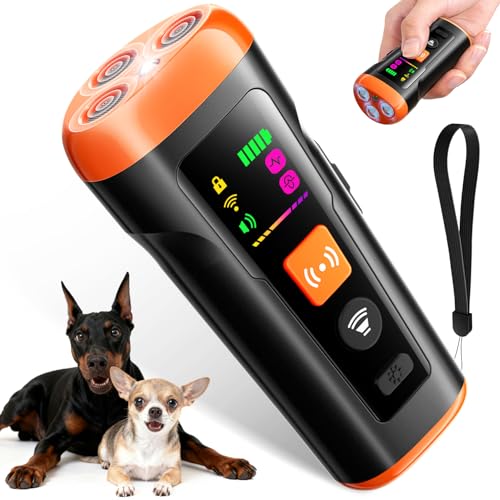
Mzorts offers an all-in-one training solution with three sonic transmitters, designed to correct barking, chewing, digging, and jumping. The device emphasizes faster results with triple transmitters while maintaining a non-irritating ultrasonic approach. A 50-foot range and auto-off safety feature help protect your dog’s ears by pausing transmission after a brief interval. Although highly effective for many dogs, results can vary by temperament and environment, so consistent, positive reinforcement is recommended to maximize success over time.
Buying Guide: Key Purchase Considerations
- Dog compatibility: Most devices target dogs aged six months to eight years. Check any breed or age limitations and consult a veterinarian if your dog has health or neurological concerns.
- Range and coverage: Consider the size of your property. Outdoor use benefits from longer ranges (40–50 feet or more), while indoor spaces may require shorter, more controlled ranges to avoid unintended cues to other pets.
- Frequency options: Models with multiple ultrasonic frequencies allow tailoring to your dog’s temperament. Fixed vs. variable frequencies can affect how quickly a dog responds and whether it tunes out the device.
- Training integration: Effective bark deterrence pairs with positive reinforcement and consistent routines. Use the device as a training cue, not a perpetual punishment, to support long-term behavior changes.
- Safety features: Look for auto-off timers, directional aiming guidance, and clear instructions to avoid overuse or exposure. Avoid devices that cause distress or pain.
- Indoor vs outdoor use: Some devices are designed primarily for outdoor yards or fences, while others are portable and suitable for walks or car rides. Choose based on where barking is most disruptive.
- Maintenance and durability: Weather resistance, battery life, and rechargeability impact long-term reliability, especially for outdoor use in varying climates.
- Ethical considerations: Prioritize humane, non-aversive methods that respect your dog’s hearing and comfort. Pair devices with training techniques that reinforce desired behaviors.
When selecting a bark deterrent, assess your goals, dog’s temperament, and the environment where you’ll use the device. Start with the lowest-risk settings and brief sessions, observing your dog’s response. If barking persists or stress signs appear, adjust the approach or consult a professional trainer. The right device, used responsibly, can reduce nuisance barking while maintaining a positive training relationship with your dog.
Notes on Responsible Use
- Always follow manufacturer instructions for duration and frequency of use.
- Avoid using the device as a constant, daily punishment; pair with rewards for desired quiet behavior.
- Avoid directing the device at a neighbor’s dog without consent or supervision.
- Monitor your dog for signs of distress and discontinue use if stressed or uncomfortable.