Best Automatic Dog Bark Control Devices for a Quieter Home
People seeking peaceful homes often turn to automatic bark control devices to minimize disturbances from dogs. These tools use ultrasound, sound, and smart detection to correct barking without harming pets. This article highlights five highly relevant products and provides a practical buying guide to help you choose the right solution for indoor or outdoor use, efficiency, and safety. Each section below features a clickable Amazon link, an image, and a concise look at notable features to support informed decisions.
Summary of chosen products:
| Product | Brand | Key Feature | Range |
|---|---|---|---|
| Queenmew Ultrasonic Bark Deterrent (3 Modes) | Queenmew | 3 adjustable frequencies; long-range deterrence | 50 ft |
| YUYQA 3X Ultrasonic Bark Deterrent | YUYQA | Three ultrasonic emitters; 6 training modes | 23 ft |
| TLettsteinkle Dual-Mode Bark Box | Tlettsteinkle | Remote + auto activation; IP45 waterproof | 50 ft |
| Holercoco 2026 AI Bark Deterrent | Holercoco | AI detection; 4 response modes; dual emitters | Unknown (longer-range coverage) |
| PetSafe Indoor Bark Control | PetSafe | Tabletop ultrasonic trainer; non-collar | 25 ft |
Queenmew Ultrasonic Bark Deterrent (3 Modes)

The Queenmew device uses ultrasonic emitters and three adjustable frequencies to deter barking without pain. The design emphasizes humane training, targeting dogs from 6 months to 8 years old, with a note not to use on dogs with epilepsy or seizures. The system’s 50-foot range makes it suitable for indoor use in larger rooms or small yards. A Type-C fast charge supports up to 30 days of typical use on a single charge, easing maintenance for households with frequent training needs. Proper operation requires a clear line of sight to the dog for best results.
Its mixed-mode approach allows owners to begin with the simplest setting and graduate to higher frequencies as needed. The device is described as compact and easy to place on a wall or shelf, offering a low-maintenance alternative to bark collars. Users should prepare for a short training period while dogs adjust to the new sound cues. Overall, this model emphasizes long-range deterrence and humane correction with robust battery life.
YUYQA 3X Ultrasonic Bark Deterrent

This model increases coverage with three synchronized ultrasonic emitters, delivering up to 23 feet of effective range. It features six training modes, combining two ultrasonic frequencies (fixed 25 kHz and variable 20–30 kHz) with an audible beep and LED flashlight for versatile correction in various settings. The kit positions itself as a humane training aid that minimizes reliance on physical corrections, suitable for use indoors or in outdoor spaces like patios or yards. Expect a short acclimation period as dogs learn to associate barking with the device’s cues.
The device’s multi-modal approach supports training across multiple environments, from quiet households to shared neighborhoods. The built-in flashlight can aid in evening walks or dim training spaces, enhancing safety. While three emitters provide broad coverage, proper placement away from obstructions improves effectiveness. Prospective buyers should consider the noise tolerance of their dogs and whether 23 feet covers the typical problem area in their home or yard.
TLettsteinkle Dual-Mode Bark Box
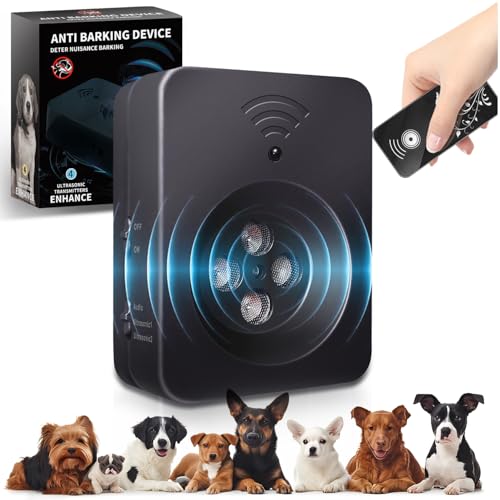
The TLettsteinkle bark deterrent combines automatic sound detection with a remote control option, enabling immediate corrections in real time. Its IP45-rated waterproof housing makes outdoor use feasible, while its 50-foot range helps address barking in yards or along fences. The device is designed to function as a deterrent for both indoor and outdoor settings, allowing users to switch between modes and use the remote for quick intervention when needed. Battery power supports portability and the option to mount on fences or posts with a quick-release strap hook.
Key considerations include weather resilience for outdoor deployments and ease of mounting in various locations. The remote feature is valuable for owners who want to intervene during specific situations, such as guests or other dogs in the neighborhood. As with all ultrasonic devices, dogs may need time to acclimate. This model aims to balance remote control with automatic triggers to reinforce training consistently across different environments.
Holercoco AI Detection Bark Deterrent

The Holercoco device features an AI-driven sound recognition chip that identifies real dog barking, aiming to reduce false triggers from voices or TV noise. It employs two enhanced ultrasonic emitters to widen coverage, complemented by four response modes that combine ultrasonic sound, beeps, and flashing light. This layered approach supports reinforcement-based training suitable for persistent or easily distracted dogs. While the exact range is described as long, practical effectiveness depends on placement and line of sight. Indoor and outdoor applications are possible, with the AI feature offering a more targeted response to barking events.
From a safety perspective, AI detection can help minimize unnecessary activations, preserving your dog’s patience. Training effectiveness hinges on consistent use and correct placement away from reflective surfaces that could interfere with sound propagation. This device is positioned for households seeking advanced technology alongside traditional ultrasonic correction, with flexibility across multiple modes to adapt to different dogs and environments.
PetSafe Indoor Bark Control
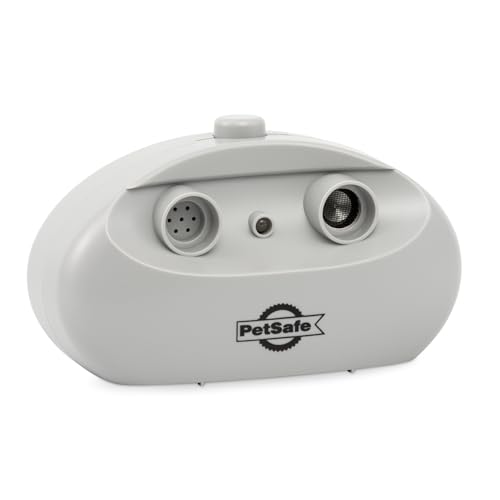
The PetSafe Indoor Bark Control is a tabletop trainer designed for indoor use, employing ultrasonic tones to curb barking without a collar. It is compact and easy to install, with water-resistant housing and a 25-foot range that supports multi-room coverage when paired with additional units. The device activates with a gentle 2-second ultrasonic sound when a dog barks, providing a predictable training cue that helps shape behavior over time. It’s a straightforward option for households seeking a non-invasive, non-collar training method with minimal setup and maintenance considerations.
Practical considerations include whether the 25-foot range covers your typical training area and how well the unit integrates with other devices in your home. The non-collar approach is a significant safety and comfort advantage for many owners, particularly those with smaller dogs or dogs sensitive to devices worn on the body. For broader coverage, multiple units can be deployed across rooms or floors to maintain consistent training signals.
Buying Guide
Key purchase considerations to help you compare automatic bark control devices:
- Range and coverage: Assess whether the device’s distance matches your target area, including indoor rooms, yards, or balconies. Longer range is beneficial for exterior spaces, but ensure it does not cause unintended activations in neighboring areas.
- Detection method: AI-based, sound-detection, or remote-activated systems each offer different reliability. AI detection can reduce false triggers, while sound-activated devices rely on bark detection alone and may need calibration for ambient noise.
- Multi-mode options: Devices with multiple ultrasonic frequencies or modes (ultrasonic, beep, flash) provide flexibility for training different dog temperaments and sizes.
- Power and maintenance: Consider battery life, charging time, and whether the unit is rechargeable or uses replaceable batteries. IP ratings matter for outdoor use in varying weather conditions.
- Safety and humane approach: Look for devices explicitly described as humane, non-painful, and non-collar. Verify that the frequencies used are within safe ranges for dogs of different ages and breeds.
- Portability and mounting: Determine whether you need a wall-mounted, fence-mounted, or tabletop model. A strap or quick-release mounting option increases versatility for outdoor use.
- Training period expectations: Most devices require a training period during which dogs learn to associate barking with the corrective cue. Plan for a few days to a couple of weeks of consistent use.
- Indoor vs outdoor suitability: Some devices excel indoors with compact builds, while others are rugged and weatherproof for outdoor scenarios. Consider whether you need a mixed indoor/outdoor solution or a dedicated setup.
- Compatibility with other devices: If you already have smart home or security products, consider whether the bark control device integrates with your existing ecosystem or remains a standalone tool.
In sum, the right automatic bark control device depends on your environment, dog’s size and temperament, and your preferred training approach. For households needing broad outdoor coverage and flexible training options, models with multiple emitters and both automatic and remote controls tend to offer the best balance of efficacy and control. For indoor use or apartments, compact units with safe, non-collar correction can deliver consistent results with minimal setup. Always follow manufacturer guidelines and monitor your dog’s response to ensure humane and effective behavior modification.