Best Australian Sand Substrates for Bearded Dragons and Other Lizards
Bearded dragons and other desert-dwelling reptiles thrive when their habitat mimics their natural environment. Australian desert sands offer a range of textures and colors that support digging, basking, and natural behaviors. This guide highlights five top Australian sand-based substrates, focusing on safety, heat transfer, and ease of maintenance. Each option below is evaluated for real-world reptile care, including ethical sourcing and environmental suitability.
Summary of chosen products
| Product | Size | Key Benefit | Brand |
|---|---|---|---|
| Jurassic Natural Australian Desert Dragon Habitat Substrate – Red | 10 lb | Natural desert feel, ethically sourced, supports digging | JurassicNatural |
| Jurassic Natural Australian Desert Dragon Habitat Substrate – Red | 20 lb | Extended coverage for larger enclosures, same natural appeal | JurassicNatural |
| BNOSDM Reptile Sand Bearded Dragons Substrate – Desert Blend | 2.2 lb | Calcium-rich, good heat conduction, natural look | BNOSDM |
| The Bio Dude Terra Sahara Bioactive Substrate | 6 quarts | Supports plant life, balanced ecology, desert landscaping | BIODUDE |
| Tfwadmx Reptile Carpet Sand Mat – 2 Pack | 12×20 inches each | Safe, non-abrasive, reversible design for easy cleaning | Tfwadmx |
When selecting a substrate for bearded dragons, consider how the material handles heat, humidity, and burrowing behavior. The options below are evaluated for safety, ease of maintenance, and how closely they match an Australian desert environment. Always monitor humidity and waste levels, and consult a veterinarian if you notice any signs of distress or digestive issues in your reptile.
Jurassic Natural Red Desert Substrate — 10 lb

The Jurassic Natural Desert Substrate is designed to recreate an Australian desert floor for bearded dragons and other desert-adapted reptiles. Ethically sourced from Central Australia, this substrate aims to provide a naturalistic base that encourages burrowing and exploratory behavior. The red hue mimics the real desert soil found across many remote regions, helping to create a visually authentic terrarium. For keepers, the material tends to stay relatively dry, aiding in odor control and routine cleaning. The key advantage is its alignment with the animal’s wild habitat, which can reduce stress and encourage natural activity.
Important considerations include its dust level and how it interacts with heat lamps. While some reptiles enjoy digging into a deeper sand layer, excessive depth can complicate waste removal. If your enclosure is heavily planted or uses live plants, ensure irrigation plans account for the substrate’s drainage properties. Ethical sourcing from Central Australia also speaks to environmental responsibility, a factor some keepers prioritize when choosing décor and habitat materials.
Jurassic Natural Red Desert Substrate — 20 lb

The larger 20-pound version provides extended coverage for bigger enclosures or multi-beast setups. Like the 10-pound option, it emphasizes a desert-like texture and native sourcing. This size helps reduce substrate replacement frequency, which can be beneficial for owners who maintain spacious terrariums or blends with multiple hides and basking spots. It is especially useful when creating layered habitats that include burrowable sections and shallow dig pits for enrichment. The color and texture remain faithful to natural desert soils, supporting a cohesive visual theme.
Adaptability is a consideration here. Some keepers pair this substrate with ceramic hides and rock formations to simulate a rugged desert landscape. Routine cleaning remains essential to minimize dust buildup and to prevent anaerobic pockets beneath piles of substrate. As with any desert substrate, monitoring humidity and airflow is crucial to prevent excessive moisture that could lead to mold or bacterial growth.
BNOSDM Desert Blend Reptile Sand

BNOSDM’s desert blend provides a natural, calcium-rich sand option designed to simulate a desert floor. Its natural material composition offers good heat conductivity, which can help reptiles absorb heat more efficiently from basking lamps. This feature can support digestion and healthy sleep cycles by maintaining a stable microclimate within the enclosure. The substrate is described as suitable for a range of desert-dwelling species, including bearded dragons and other lizards, with a focus on a safe texture that promotes digging and exploration.
From a care perspective, the key trade-offs involve potential ingestion risk and the need for routine cleaning to prevent sand or dust from accumulating in the animal’s nostrils or mouth. Providing a shallow depth that still allows digging, while using routine spot-cleaning, can mitigate these concerns. If the enclosure houses multiple species, ensure the substrate type aligns with the husbandry needs of each species to avoid cross-environment stress.
Bio Dude Terra Sahara Substrate — 6 Quarts
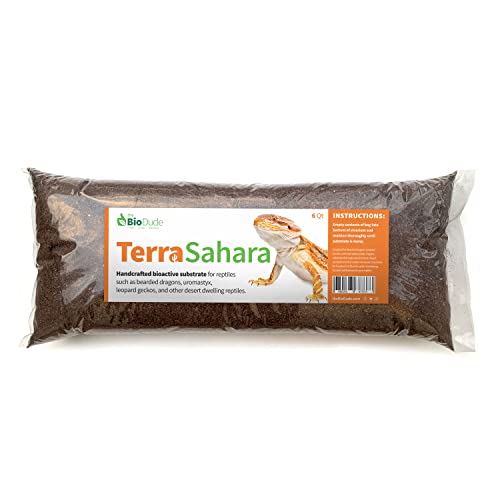
The Bio Dude Terra Sahara substrate is marketed as a bioactive option, designed for terrariums and vivariums. It’s positioned as a bedding that can support desert plants and a balanced ecosystem, with ingredients selected to maintain soil life and a drier middle and bottom layer. The product description emphasizes that it does not raise humidity, helping to stabilize the enclosure’s overall climate. For bearded dragons, this type of substrate can be appealing to keepers who want a more naturalistic landscape with plant-friendly potential, offering opportunities for microhabitat enrichment.
Considerations include the readiness of the substrate to host beneficial microbes and how well it coordinates with your lighting and feeding routines. Bioactive setups require careful planning, particularly in terms of hydration management and substrate depth. Some keepers prefer to separate plantable areas from walkable zones to maintain clean feeding and basking sites. Always monitor digestion and waste to assess if this substrate supports long-term health in your specific reptile.
Tfwadmx Reptile Carpet Sand Mat — 2 Pack

The Tfwadmx reptile carpet mats offer a non-sand alternative designed to reduce ingestion risks and injuries. These mats are constructed from breathable, non-abrasive materials that are gentle on paws and nails. The mats are described as reversible, featuring two patterns to match different aesthetics—from natural rock textures to a more desert-brown look. This option is particularly attractive for owners seeking a quick, low-dust substrate alternative that still supports the tank’s visual desert theme.
Maintenance is straightforward: wash or wipe down weekly, roll up and shake off debris, then rinse and air dry. The mats are designed to be replaced easily, helping to maintain a clean living space for the reptile. While not a traditional loose substrate, these mats can be used in conjunction with small-debris-collecting substrates or as a breathable top layer to reduce dust and waste buildup in the enclosure.
Buying Guide: Key Purchase Considerations And Comparisons
Substrate choice affects health, behavior, and enclosure hygiene. Here are some critical factors to compare when selecting an Australian sand-based option for bearded dragons and similar reptiles:
- Safety and ingestion risk: Loose sand variants can be accidentally ingested. Consider substrates with texture and particle sizes less likely to cause impaction, and monitor your pet’s eating habits.
- Heat transfer and thermoregulation: Materials with good thermal conductivity help reptiles absorb heat from basking lamps, supporting metabolism and digestion.
- Humidity management: Desert substrates typically aim to maintain lower humidity. Bioactive mixes may require different moisture management compared to pure sands.
- Durability and maintenance: Reusable mats offer easy cleaning and less dust, while loose sands may require more frequent spot-cleaning and substrate replacement.
- Ecology and enrichment: Substrates that support burrowing and plant life provide enrichment but may require more complex maintenance and monitoring.
- Aesthetic alignment: The red desert tones and textures visually complement desert vivariums, helping to create a realistic environment for viewing and care.
- Ethical sourcing: Substrates sourced from authentic Australian environments often reflect responsible mining and environmental stewardship, which some keepers consider important.
Comparing these options, you can tailor your choice to enclosure size, plant integration, and the bearded dragon’s activity level. For novice keepers, a non-dusty substrate with built-in safety features and easy maintenance may be ideal. Experienced keepers may experiment with bioactive substrates that support micro-ecosystems, provided they have the knowledge and time to manage moisture and plant life. Always observe your reptile after introducing a new substrate to identify adjustments needed for feeding, digging, and basking behavior.
In multi-species setups, ensure substrate compatibility. Some reptiles may require finer sands, while others benefit from coarser textures that reduce ingestion risk. Temperature gradients, hides, and water sources should be aligned with the substrate choice to maintain a stable, healthy environment. Consulting with a reptile veterinarian or experienced herp keeper can help tailor substrate decisions to your specific species and enclosure configuration.